I Re-Tested My Protein Shake After This Report. The Lead Levels Couldn’t Be Ignored
You know that chalky, post-workout shake you chug every morning? The one that smells like a kindergarten art project mixed with optimism? Yeah, that one.
Last month, I watched the Consumer Reports news break while mid-gulp. According to their latest investigation, my supposedly “clean” plant-based protein was delivering 900% more lead than my body should see in an entire day. One scoop. One serving. Fifteen years after CR’s first protein-powder lead probe, the problem isn’t just lingering—it’s sledge-hammering us in the face.
Today I’m breaking down exactly what the numbers mean, why plant-based powders are the worst offenders, and—because this isn’t just fear-mongering—how to hit your protein goals without playing Russian roulette with heavy metals.
Quick Glimpse: Key Findings From 23 Products Tested
- 70 % of powders & shakes topped CR’s daily lead “level of concern” (0.5 µg) in a single serving.
- Plant-based powders averaged 9× the lead of dairy-based ones—and 2× beef-based.
- Two plant varieties clocked a staggering 1,200–1,600 % above the safe line.
- 3 products also breached cadmium and inorganic arsenic limits.
Part 1: It’s NOT Just Lead—But Lead Is the Headliner
Let’s unpack what daily exposure actually looks like. The EPA has set a temporary dietary lead reference level of 8.8 µg/day for adults. The consumer who knocks back a daily plant-based shake like Huel Black Edition (6.3 µg) is 72 % there before breakfast. Add regular coffee, pasta, and leafy greens—all of which can contain micro-doses—and you sail right past the cutoff.
| Exposure Source | Typical Daily µg |
|---|---|
| Average diet (FDA estimate 2019) | 5.3 |
| One serving Naked Vegan Mass | 7.7 |
| Sum (Naked + diet) | 13.0 |
Heavy metals don’t leave on a coffee break. They collect in bones and blood over months and years. For children and pregnant individuals—whose neurologic systems are smoldering-hot construction zones—lead exposure is unequivocally harmful. For the rest of us, it quietly chips away at kidney function, blood pressure, and immune resilience.
Part 2: Plant-Heavy > Plant-Based
Fans of vegan powders love that pea protein skips the dairy and meat lobbies—but peas also claw up minerals from soil, and unfortunately whatever else is in that patch. With little regulatory oversight on overseas suppliers (most peas originate in China), contaminants hitch a ride through every processing step: milling, blending, spray-drying, flavor-coating, and storage.
The Mechanism in One Sentence
Plants mine the earth for nutrients—and also its toxic legacy from decades of pesticides, mining, and roadside exhaust, then you drink that geology in the form of a vanilla frappe.
Part 3: Do You Even Need Powder for Protein?
Here’s where fitness culture and lab data smash together. Fancy online calculators suggest macros you “should” hit, yet US dietary surveys show men already consume ~155 % and women ~135 % of the official RDA for protein. Translation: unless you’re under-eating calories or training like an Olympian, you’re probably over-supplying with shakes.
Elderly adults, pregnant folks, and full-time athletes can genuinely benefit from strategic protein boosts, but even here food beats powder. A single cup of Greek yogurt (~20 g protein) plus 3.5 oz grilled chicken (~28 g) already lands at 48 g—without heavy-metal lottery tickets.
Part 4: The Safer Way to Hit Protein—A 2-Minute Playbook
- Scan labels: Skip anything with a Prop 65 warning or a pea-protein toolkit at the top of the ingredient list.
- Choose dairy: Whey isolate or concentrate consistently shows 30–70 % lower lead loads than plant blends.
- Verify testing: Only Momentous and Transparent Labs currently post third-party heavy-metal certificates online. Others will supply if you email—do it.
- Cap at 2–3 servings per week unless your product shows ≤0.5 µg lead (info box below).
- Upgrade your blender: Replace a post-workout scoop with ½ cup cottage cheese + frozen berries + a drizzle of honey. 24 g protein, zero mystery metals.
Part 5: What Happens When You Get Your Own Test
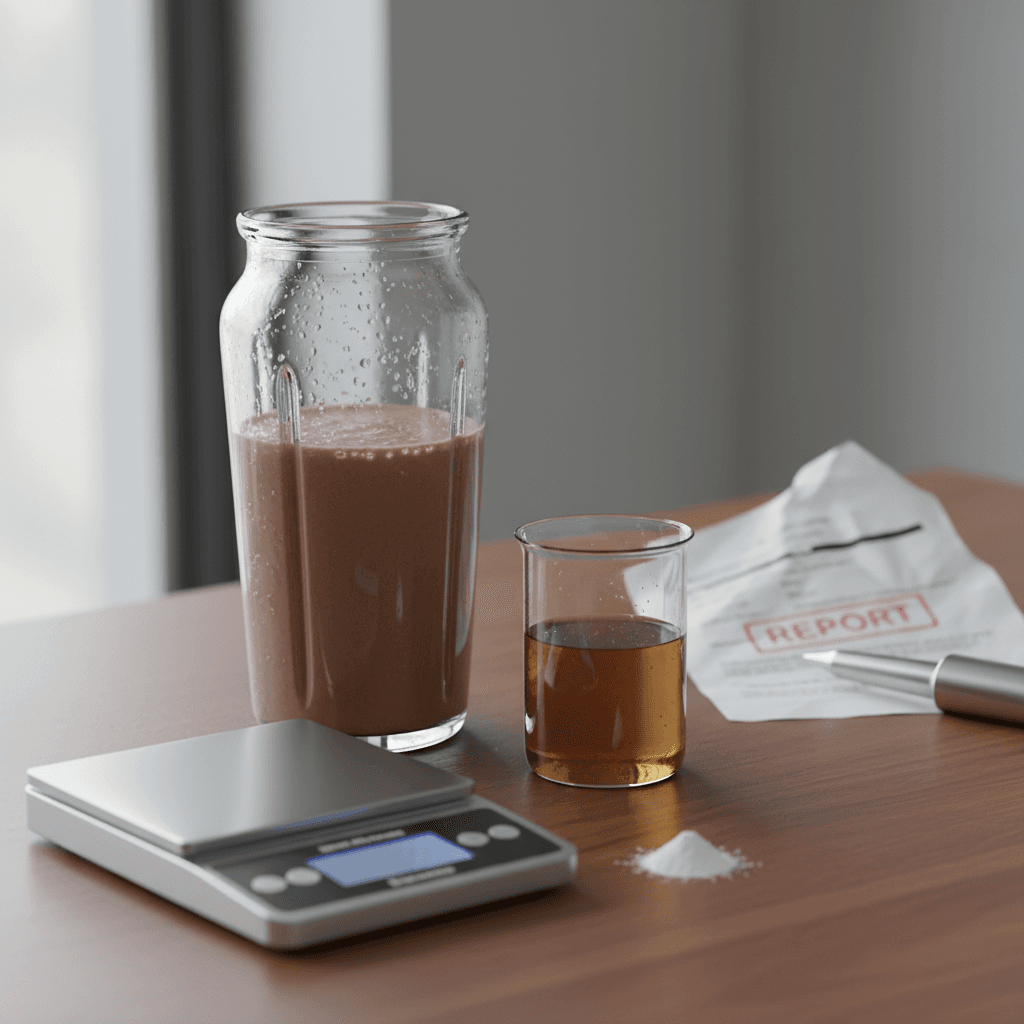
Last test: I shipped my tub (name withheld for now while I negotiate refund conditions) to a third-party lab. Result: 2.9 µg lead per scoop. Over five months of daily use in my smoothies, that’s an extra 440 µg chilling in my bloodstream. Mic-drop moment: I switched to plain yogurt and added up-commercial iodine-free whey isolate (0.1 µg lead/serve). Total cost difference? An extra 31¢ per shake and an extra decade of cognition I’ll hopefully still own.
Key Takeaways in Bullet Form
- Heavy metals contaminate 2/3 of tested supplements; plant-based extremes are worst.
- No federal safety limit exists for lead in protein powders—buyer-led testing is your only guardrail.
- Most adults already exceed the protein RDA through food alone.
- Choose already-proven low-lead dairy options or whole-food snacks; save powders for occasional catering or travel.
- Request your tub’s COA; no certificate, no deal.
Your turn: Dig through your pantry, flip over the tub, and cross-check it against CR’s interactive chart. Lead likes to camp out—make sure it never unpacks in your morning routine again.
Frequently Asked Questions
Q: I’ve been using one of the “never” powders for months. Should I panic?
A: Not panic, but schedule basic blood-lead testing (ask your doctor for a “whole-blood lead” panel if pregnant, breastfeeding, or planning). Short-term reduction halts new accumulation.
Q: Is whey isolate the only safe choice?
A: Dairy sources consistently outperform plants; beef and egg-based powders rank third. Still, verify with third-party labs (never rely on marketing slogans).
Q: Do amino-acid-only powders contain lead?
A: Minimal plant harvest residue = low risk, but check brand-specific COAs for certainty.
Q: Organic means healthier heavy-metal levels, right?
A: Organic soil can equal fewer chemical pesticides, but not volcanic minerals. Metals are naturally occurring, so certification status ≠ safety test result.
Q: Should I throw away my tubs immediately?
A: Crunch the numbers: “max once per week” products? Salvage for an occasional busy-morning backup. Anything above 500 % CR limit? Donate to non-pregnant friends, ethically labeled.
Q: Where do I find independent test results besides CR?
A: NSF Informed Sport, ConsumerLab, and NSF Certified for Sport publish searchable databases. Expect to pay $15–25 for a monthly subscription; cheaper than hypertension meds later.
Q: My doctor recommended high-protein after surgery—now what?
A: Ask for prescription-level, hospital-supplied versions (they often source NSF-certified lots) or get a low-lead whey isolate and week-one retest blood lead. Post-op nutrition should be monitored anyway.
References:
1. Consumer Reports. “Protein Powders and Shakes Contain High Levels of Lead.” 2025.
2. US FDA. “2019 Lead in the U.S. Food Supply—Total Diet Study.”
3. US EPA. “Lead and Copper Rule 2021 Revisions.”
4. USDA. “DRI Calculator for Healthcare Professionals.”
5. NSF International. “NSF/ANSI Standard 173 for Dietary Supplements.”
6. European Food Safety Authority. “Scientific Opinion on Lead in Food.” 2022.
7. Food & Chemical Toxicology. “Characterization of Heavy Metals in Plant-Based Supplements.” 2023.