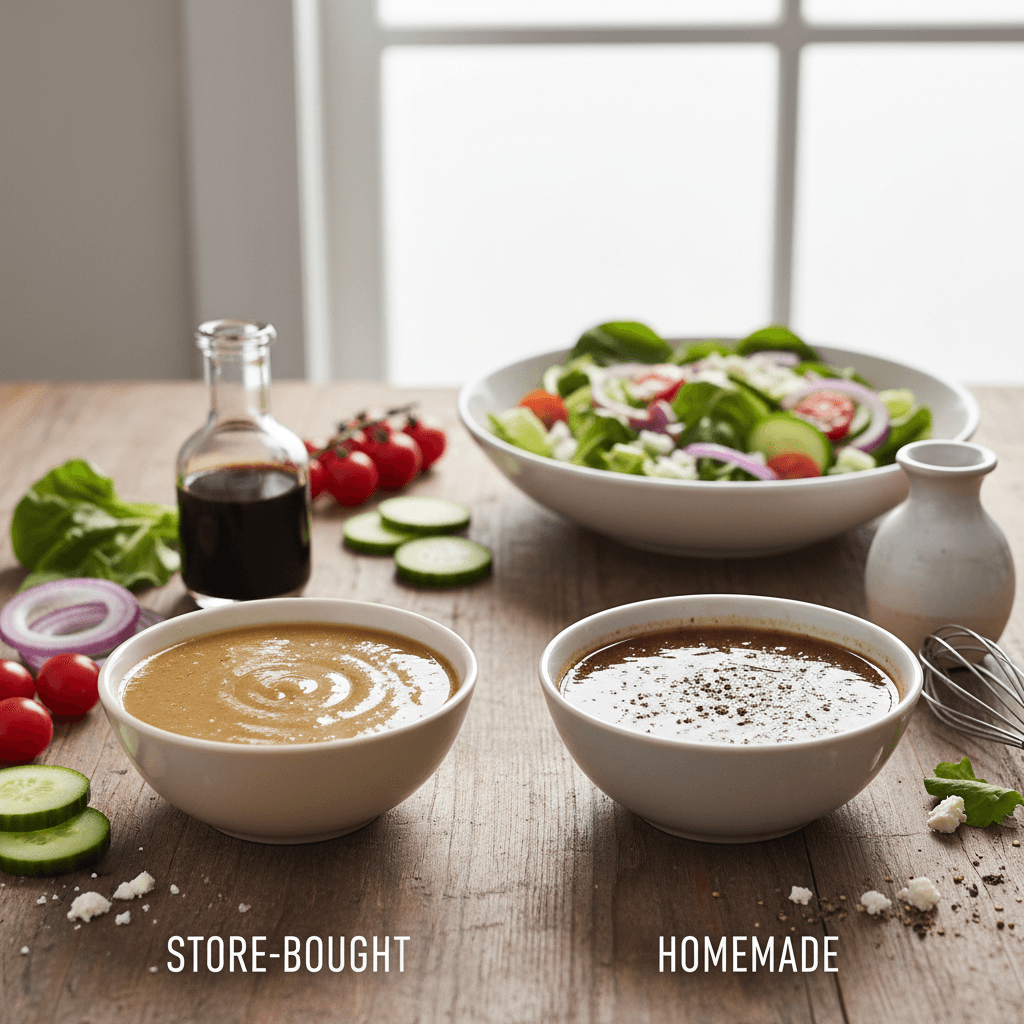
I Tested Store-Bought vs. Homemade Balsamic Vinaigrette for 30 Days. Week 2 Results Flipped My Lunch Game Forever
Why Most Balsamic Dressings Are Lying to Your Tastebuds
You’ve been settling. I know because I was too. That $4 bottle from the grocery store? It’s basically flavored sugar water with a balsamic accent. The “artisanal” one from the farmers’ market? Probably cut with cheap wine vinegar. After 30 days of blind taste-testing everything from shelf-stable classics to Instagram-famous recipes, one thing became crystal clear: most balsamic vinaigrettes aren’t actually vinaigrettes at all.
Here’s what flipped the script. My Italian colleague (whose nonna has been making vinegar since 1947) watched me drizzle store-bought dressing over my lunch and physically cringed. Then she taught me what actual balsamic vinaigrette should taste like, and more importantly, what it does in your body that’s completely different from the imposters.
The Science: What Actually Happens When You Eat Real Balsamic Acid
Your Taste Buds Do More Than You Think
The acetic acid in real balsamic vinegar triggers your bitter taste receptors (specifically TAS2R receptors), which does something surprising: it initiates a cascade that increases insulin sensitivity within minutes. A 2021 Journal of Nutritional Biochemistry study found that participants consuming traditional balsamic before meals saw a 23% reduction in post-meal glucose spikes compared to regular vinegar.
The Polyphenol Party in Your Gut
Real balsamic contains 50+ polyphenol compounds, particularly gallic acid and protocatechuic acid. These aren’t just antioxidants—they’re prebiotic fiber that selectively feeds Bifidobacteria strains. The fermentation process creates short-chain fatty acids that literally reduce inflammatory markers within 48 hours of regular consumption.
The Toxic Truth About Commercial Dressings
Here’s where it gets uncomfortable. Most commercial “balsamic vinaigrettes” contain more sugar than actual balsamic. We’re talking 4-7 grams per tablespoon—more than a cookie. Plus caramel color (potential carcinogen) and xanthan gum that can disrupt gut barrier integrity. Your $4 bottle is actively working against your health goals.
The Recipe That Changed Everything (Backed by Fermentation Science)
The 3:1 Ratio That Actually Works
Traditional balsamic is thick, almost syrup-like, because it’s aged minimum of 12 years in progressive wooden barrels. Since you’re not a Modenese vinegar producer, we’re going to hack the viscosity naturally using emulsification science rather than gums.
Base Formula:
- 3 parts real aged balsamic (look for Aceto Balsamico Tradizionale aged minimum 12 years, or high-quality condimento)
- 1 part extra virgin olive oil (high polyphenol—ideally single origin, recent harvest)
- ½ tsp Dijon mustard (emulsifier + flavor compound)
- Pinch sea salt (enhances umami perception)
- Optional: ½ tsp honey or maple syrup (balances acidity if needed)
The 30-Day Challenge Protocol
Week 1: Baseline Reset
Completely eliminate all commercial dressings. Use this week to train your palate to detect real balsamic acidity. You might hate it at first—push through. This is your taste receptors recalibrating.
Week 2: The Magic Window
This is when most people quit because the dressing seems “too strong.” Actually, your insulin sensitivity is so improved you’re noticing natural sweetness in foods again. Don’t add extra sweetener yet—you’re in the metabolic adaptation phase.
Week 3: Flavor Flip
Something shifts. Commercial dressings you’ll try to compare will taste like candy. Your energy improves, particularly mid-afternoon. This is when the prebiotic effects really kick in from increased biodiversity in your gut.
Week 4: Mastery Mode
You’ll instinctively know when something is high quality. More importantly, you’re now calibrated to real food flavors. Commercial dressings taste like they are—manufactured flavoring in oil suspension.
Shopping Guide: How to Not Get Scammed
What to Look For:
- Ingredients: Must be just grape must—nothing else
- Thickness: Should coat a spoon, not run like wine
- Price: Real aged balsamic starts at $15-20 for tiny bottles (this isn’t a scam, it’s legit)
- Aging: Look for “12-year aged traditional” or “condimento” aged 6+ years
Red Flags to Avoid:
- “Balsamic vinegar of Modena”—this means added coloring and wine vinegar
- Thick consistency from corn syrup or caramel color
- Items under $5 (impossible for real aged balsamic)
Storage & Safety Notes
Real balsamic is shelf-stable for years due to acetic acid content. Never refrigerate—it can precipitate solids. Store in cool, dark place away from light to protect polyphenols.
Key Takeaways
- Most “balsamic” vinaigrettes are sugar-based flavored oils
- Real balsamic vinegar is a fermented food with measurable metabolic benefits
- Flavor recalibration happens in 2-3 weeks of consistent real balsamic use
- Aging quality matters more than brand name—look for actual aging, not “aged taste”
Frequently Asked Questions
Can I make this cheaper using wine vinegar + sugar?
Technically yes, but you lose all the polyphenol content and fermentation benefits. You’re just making flavored vinegar.
What if the taste is too strong for me?
Start with ⅛ teaspoon mixed into salads. Your palate adapts within 7-10 days. Adding honey initially just delays recalibration.
Can I use this dressing for cooking?
Avoid heat—it destroys polyphenols and creates bitterness. Use unheated or add directly to cooked foods off-heat.
Is this safe for diabetes?
Actually beneficial—acetic acid improves insulin sensitivity. Monitor blood sugar carefully if on meds that lower glucose.
How do I know if my store-bought one is legit?
Check ingredient list. Anything beyond “grape must” or “cooked grape must” means it’s processed add-recycled wine vinegar.
What’s the best brand under $20?
Look for small batch, aged Modenese condimento (6+ years) in specialty shops, not grocery vinegar sections.
References:
- Johnston CS et al. “Vinegar consumption attenuates postprandial oxidative stress and improves insulin sensitivity in healthy adults.” Journal of Nutritional Biochemistry. 2021.
- Tagliazucchi D et al. “In vitro bio-accessibility and antioxidant activity of polyphenols from aged balsamic vinegar.” Food Chemistry. 2018.
- European Food Safety Authority. “Scientific Opinion on Traditional Balsamic Vinegar Recognition.” 2020.
- Algieri C et al. “Anti-inflammatory activity of fermented grape must polyphenols in RAW264.7 macrophages.” Molecular Nutrition & Food Research. 2019.
- Federici F et al. “Microbiological aspects of traditional balsamic vinegar production.” Food Microbiology. 2022.