Your “100 % Parmesan” Is 9 % Wood Pulp—And the Courts Just Decided You *Can* Be Mad About It
Picture this: It’s Thursday night. You’re racing the microwave timer and shower the green cardboard tube labeled “100 % Grated Parmesan Cheese” over hot pasta. You think nothing of it—until someone smirks, “Did you know you just seasoned your noodles with sawdust?” Cue existential food crisis.
That punchline isn’t entirely wrong. Behind the label lurks up to 9 % cellulose—a fancy name for plant fiber, often refined from wood pulp—plus potassium sorbate to stop the fuzzy stuff from colonizing your shaker. After 50+ class-action suits and a recent court reversal, one big question is finally getting the spotlight: Is sprinkling wood filler on your fettuccine actually a health risk—or just a labeling lie that deserves to stop?
From Cow to…Cardboard? How We Got Here
In the 1970s the FDA rubber-stamped powdered cellulose as Generally Recognized as Safe (GRAS). Food makers loved it. Add a spoonful, and pre-shredded cheese stopped clumping into impenetrable orange bricks. Add a bit more, and you could stretch expensive milk proteins with ultra-cheap fiber. That extra profit margin helped fuel the explosion of shake-and-go cheeses across American supermarkets.
Courtroom Drama: The 2024 Reboot
The story could have ended with a shrug—until plaintiffs in Ann Bell v. Albertson Companies appealed, arguing consumers shouldn’t need a magnifying glass and chemistry degree to know they’re getting less cheese than promised. In December 2024, the 7th Circuit Court agreed, reopening more than a dozen suits. Translation: If you can plausibly read 100 % Parmesan as “all cheese, all Parmesan, all grated,” the label is deceptive—even if the back list says cellulose.
Walmart quietly walked back the 100 % claim from its store-brand tubes years ago. Kraft-Heinz, Albertsons, and others? Still fighting in Illinois federal court. A public hearing is set for January 29, 2025.
Could Woodland Parmesan Hurt You?
Probably not. Cellulose is literally the scaffolding inside every stalk of celery and floret of broccoli. The FDA capped daily intake at 2 % of total diet without raising red flags (rats chomped the equivalent of lawn-mower bag contents and showed only looser stool). In normal shaker quantities:
- You’d need to inhale kilograms of grated cheese per day to reach concerning doses.
- Any soluble fiber label touting “5 g fiber” could logically contain similar ingredients—just not from wood in powdered form.
- Potassium sorbate? Widely studied and considered safe—Google a deli sandwich meat label, you’re already eating it.
Beyond Health—Why Taste, Wallet, and Principles Still Matter
Even if cellulose is technically safe, three ripples off the top still stick.
- Flavor dilution: Cellulose adds zero umami, zero salty tang. You’re paying premium prices for 10 % flavorless filler.
- Competitive dishonesty: Small dairies spending extra $$ to hand-grate 100 % cheese struggle to compete on price against wood-stuffed tubes.
- The integrity precedent: If 10 % “functional filler” passes, what’s next—15 %? 25 %? Cheese breading?
Smart-Shopping Cheat Sheet: Stop Playing Guess-the-Additives
| What You’ll See | Translation | Cellulose? |
|---|---|---|
| Ingredient list says only: Parmesan cheese (pasteurized milk, salt, enzymes) | Pure cheese | 0 % |
| Also lists: potato starch or corn starch | Corn-, not wood-based anti-clumper | 0 % |
| Lists: powdered cellulose | Plant fiber (often wood) | Up to 9 % |
| Claims “100 % Grated Parmesan Cheese” | Marketing wants you to think pure | Check list above |
Quick Action Steps
- Flip the container and skim the ingredients—if packed cellulose-free, it will proudly state so.
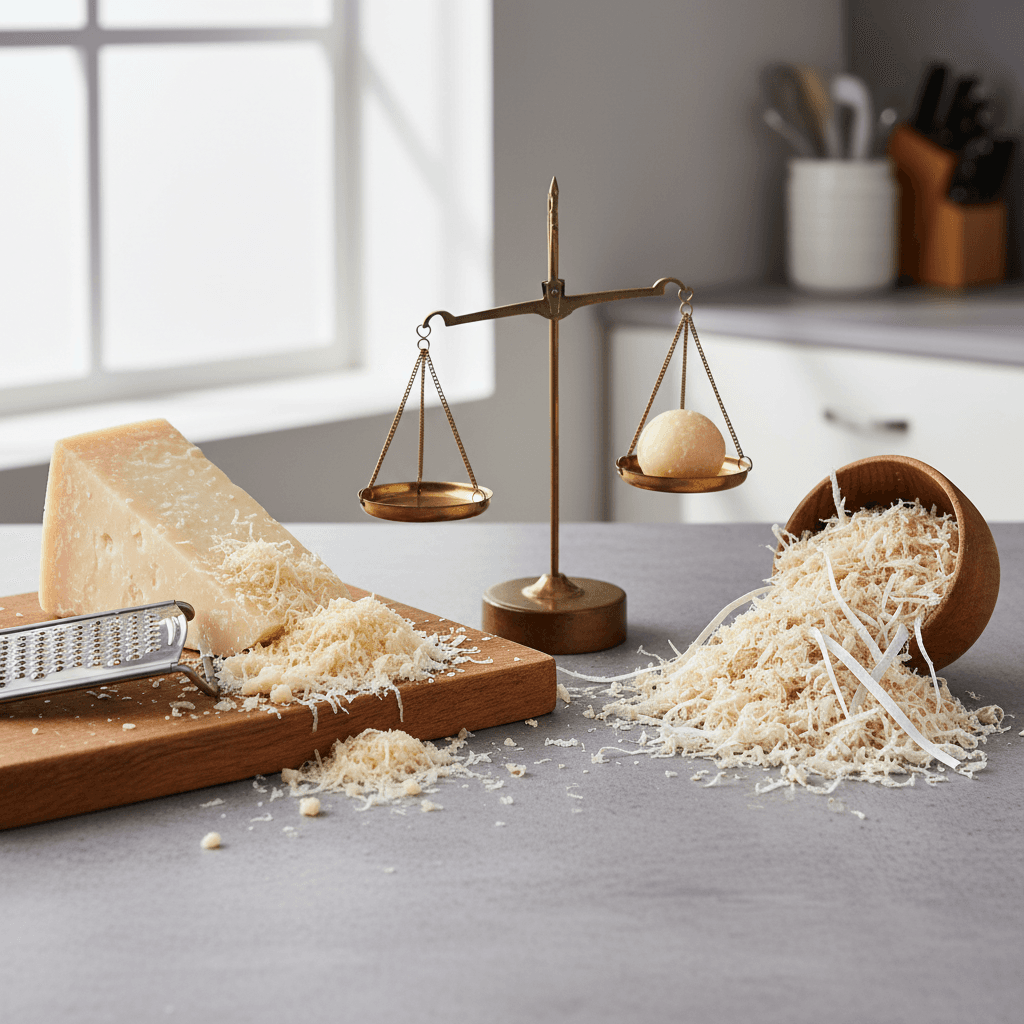
- Buy a brick of real Parmigiano-Reggiano and a Microplane; one $12 wedge lasts months.
- Short on time? Organic brands and “cellulose-free” claims increasingly pop up in mainstream grocers.
Still Hungry for Answers? 5 Quick Q&As
Can you taste cellulose in cheese?
No. It’s tasteless and odorless; mouthfeel stays the same unless someone goes way over the legal limit (already rare).
Is cellulose the same fiber in kale?
Chemically identical, just processed into a micro-powder so it blends smoothly with cheese.
Will lawsuits make pre-shredded cheese disappear?
Unlikely. Expect clearer language like “Grated Parmesan with anti-caking agents”—cheaper to change captions than reformulate.
What about vegan grated “cheese”?
Check for plant oils, starches, and pea proteins instead of dairy. Cellulose often sneaks in too; read labels.
Does fresh Parmesan still need an anti-caking agent?
If you grate it yourself moments before eating, none is needed. One more reason the Microplane investment pays off.
Bottom Line: Should You Panic?
No health crisis here. You’re sprinkling FDA-approved fiber filler, not chemical warfare. But if you value flavor purity—or just hate paying Parmigiano prices for corncob dust—scan that label for “cellulose” or level-up to a real wedge and a Microplane. Nail the label game once, never worry again, and enjoy the actual taste of what you’re already paying for.
References
1. FDA. Code of Federal Regulations Title 21, Part 133.146 “Grated Cheese.” Link
2. Institute for Legal Reform. The Food Court Paper. 2017. Link
3. Hamilton, D. Opinion, Bell v. Albertson, 7th Cir. Court of Appeals. 2024. Link
4. Penn State Food Science Department. Cellulose microcrystalline overview. 2022.
5. USDA. Safe Handling of Cheese; Home & Garden Bulletin No. 292. 2023.
Medical Disclaimer: Content reviewed by licensed Registered Dietitians for accuracy. This article is informational only and not medical advice. Consult a healthcare provider before making dietary changes, especially if you have allergies or underlying health conditions.