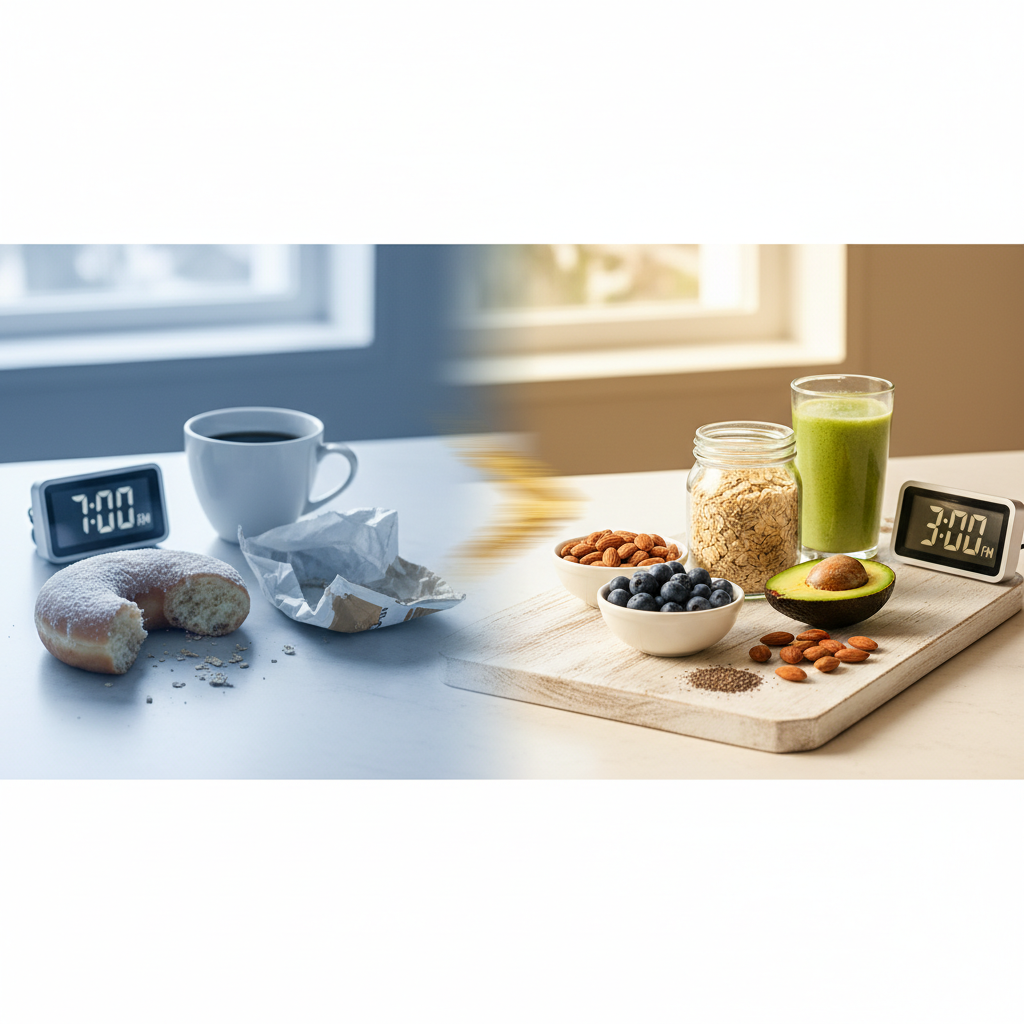
That “Healthy” Obsession Is Quietly Sabotaging Your Goals. Here’s How to Fix It.
My friend Mark recently told me he invested in a new, high-tech water filter. “Gotta get rid of those microplastics, you know?” he explained, eyes alight with newfound purpose. This was the same Mark who, just weeks earlier, had confessed to struggling with consistent gym visits, relying heavily on takeout, and trading sleep for late-night scrolling.
“What about trying to hit the gym three times a week, or prepping a few meals on Sunday?” I asked, gently.
His response? A familiar refrain: “Yeah, but I’ve tried that a thousand times. If it were that simple, it would have worked already.”
Sound familiar? We’ve all been there. Chasing the shiny new supplement, the “detox” tea, or the latest bio-hack, while the tried-and-true foundations of health gather dust. We pour hours into researching the ultimate, most optimal workout instead of just… doing the basic workout we already know.
Why do we fall into this trap? Because buying new gear *feels* like progress. Consuming endless content *feels* like we’re doing something. But here’s the secret no one wants to admit: nothing actually changes until we take real, consistent action on the basics.
We’re clever creatures, us humans. And we’ve developed some truly ingenious ways to avoid the unsexy, often difficult actions that actually drive meaningful change. In this article, we’re going to pull back the curtain on this widespread distraction, explore why we get caught, and arm you with a compassionate, actionable blueprint to finally get unstuck.
You’ll discover:
- What the most impactful health habits actually are (spoiler: they’re not sexy)
- Three hidden barriers that keep you from consistent progress
- A 4-step process to embrace powerful, practical action
- How to build consistency that lasts – even when life gets messy
The Core 6: What Your Body REALLY Needs (and Already Knows)
Let’s be brutally honest: you likely already know the core tenets of a healthy life. They’re not hidden in some secret ancient scroll or whispered among elite bio-hackers. They’re the fundamentals, the kind of advice your grandma probably gave you (and science now backs up). Yet, despite this common knowledge, actually *doing* them consistently remains a challenge for most of us.
So, what are these non-negotiable foundations? Here’s the rundown:
Move Your Body, Regularly.
Aim for at least 30 minutes of moderate-to-vigorous physical activity most days of the week, combining aerobic exercise (think brisk walking, dancing, cycling) with resistance training (lifting weights, bodyweight exercises). This isn’t about becoming an Olympic athlete; it’s about making movement a non-negotiable part of your daily rhythm. Regular physical activity profoundly impacts cardiovascular health, mood, bone density, and metabolic function. Studies consistently show it’s a cornerstone for longevity and quality of life. Think of it as your body’s daily tune-up.
Nourish with Whole, Minimally-Processed Foods.
If 80% of your plate comes from fruits, vegetables, lean proteins, whole grains, and healthy fats, you’re doing phenomenally. This approach prioritizes nutrient density and fiber, supporting everything from gut health to sustained energy. It means focusing on ingredients, not just labels. And yes, that still leaves room for your favorite pizza or dessert – perfection isn’t the goal, consistency is. Research indicates diets rich in whole foods significantly reduce the risk of chronic diseases.
Fuel Up with Enough Protein.
Protein isn’t just for bodybuilders. It’s crucial for muscle repair, satiety (keeping you feeling full), and maintaining metabolic health. For most active adults, aiming for about 1.2 to 2.2 grams of protein per kilogram of body weight daily (roughly 4-6 palm-sized portions of lean protein) can support these vital functions. Adequate protein intake is a powerful tool for body composition, helping preserve muscle mass during weight loss and supporting strength.
Prioritize Quality Sleep.
Seven to eight hours of quality sleep per night is non-negotiable for physical recovery, cognitive function, and emotional regulation. In our always-on world, sleep often takes a backseat, but its impact on hunger hormones, decision-making, and immune function is profound. Creating a consistent sleep schedule and a relaxing wind-down routine can work wonders. The CDC identifies insufficient sleep as a public health problem, linking it to numerous chronic health conditions.
Mind Your Mind (and Substances).
Reducing excessive consumption of alcohol, drugs, and cigarettes is a no-brainer for long-term health. While occasional indulgence is part of life, consistently overdoing it strains your liver, impacts mental health, and increases disease risk. This also extends to managing stress: chronic stress is a silent disruptor, affecting hormones, digestion, and sleep. Incorporating stress-reduction techniques like meditation or spending time in nature is just as vital as any physical habit. The NIH highlights the detrimental effects of chronic stress on nearly every body system.
Cultivate Positive Connections.
While often overlooked in “nutrition” articles, nurturing social relationships is a powerful determinant of health and longevity. Loneliness and social isolation have been linked to increased risk of heart disease, stroke, depression, and cognitive decline. Humans are inherently social creatures, and having a supportive network provides emotional resilience, reduces stress, and even promotes healthier behaviors. Research consistently demonstrates the profound impact of social connection on well-being and lifespan.
You’d think these basics would be, well, *basic* for most people. Yet, studies show that only about 6% of Americans consistently perform even five foundational health behaviors. If we added “managing stress effectively” and “cultivating positive social relationships” to that list, the number would shrink even further. This isn’t about shaming; it’s about realizing that despite knowing what to do, *doing it* is the real challenge.
That push-and-pull feeling when you consider a big change? That’s ambivalence. It’s the natural mix of “I want this” and “but I also want that.” For example, wanting to eat healthier *and* wanting your favorite treats without constraint. Or, wanting to break a bad habit *but not* wanting to deal with the discomfort it brings. This isn’t a sign of weakness; it signals that the change *matters* to you. It’s a sign you care, and that’s good news.
The “Shiny Object” Trap: Why We Fall for Distractions
So, if the basics are so powerful, why do we constantly seek out the next “secret”? Why do we complicate what should be simple? It turns out, our brains are beautifully, frustratingly wired to do exactly this.
Barrier #1: The Ambition Overload Avalanche
You decide: “Starting Monday, I’m going to work out an hour a day, eat only organic vegetables, cut out all sugar, and be in bed by 9 PM!” Meanwhile, you currently exercise twice a month, despise most vegetables, and routinely scroll past midnight. Sound familiar?
We’re asking our future selves to perform a miraculous metamorphosis. This “planning fallacy” – our tendency to underestimate the time and resources required for a task – combined with an optimism bias, makes us believe we’ll have more time, energy, and willpower in the future than we actually do. There’s a powerful, momentary comfort in crafting an elaborate, idealistic plan. We’re essentially offloading the hard work onto a future version of ourselves.
But here’s the rub: big, complex plans rarely fit into our already busy, complex lives. When we (inevitably) fail to execute these ambitious goals, we blame ourselves, our “lack of discipline,” and reinforce a narrative that we “struggle with consistency.” We fulfill our own prophecy.
Barrier #2: The Quest for the ‘Secret Sauce’
“If getting healthy just took eating, sleeping, and exercising moderately well, then everyone would be healthy.” This is a common, compelling argument. It fuels the belief that there *must* be some hardcore, industry-secret, or cutting-edge strategy we’re missing.
But as we saw, 94% of Americans *aren’t* doing the basics consistently. The simple fact is, the simple behaviors *work*. Most people just aren’t doing them all, simultaneously, and consistently enough to see the results they crave.
Part of the allure of the “secret sauce” is that the basics can feel a little… boring. We crave novelty, an interesting new approach. With something new, there’s always the possibility of a new outcome, a “new us.” And that’s incredibly appealing. Unfortunately, most “hardcore” or “cutting-edge” tools are unsustainable, inaccessible, ineffective, or simply unproven. They’ll drain your energy, time, and money, all while distracting you from what actually works.
Be wary of health claims that sound too good to be true, promise instant results, or require expensive, obscure products. The vast majority of groundbreaking health improvements come from consistent application of well-established, fundamental habits.
Barrier #3: The Perfection Illusion
The health and fitness industry often promotes an image of “perfect” health: organic salads, marathon-ready bodies, 5 AM meditations, and gratitude journaling. The unspoken lie is that you *have* to be flawless to be healthy.
The truth? Perfection isn’t required. In fact, it’s an illusion. Even the healthiest humans get sick, have bad days, face digestive woes, or just feel “off.” None of us are immune to the messy reality of being human. Believing in this unattainable ideal makes us vulnerable.
It’s far more comfortable to believe that if you just follow *this* specific routine or take *that* powdered supplement, you’ll be insulated from any painful human experience. The irony is, to achieve your *realistic* “best self,” you must accommodate your “worst self.” Life happens: work gets crazy, kids get sick, or it’s “pie season.” These obstacles make perfection impossible to maintain.
Letting go of the “perfect” self frees you to support the *real* self – the one who sometimes prefers a cozy night in over a workout, or a bag of chips over a meticulously prepped meal. Accepting this allows for flexibility, which is the secret ingredient for long-term consistency.
Ready to Get Unstuck? Your 4-Step Blueprint
Now that we understand the subtle sabotages at play, let’s explore a practical, compassionate roadmap to reclaim consistent, impactful action.
Step 1: Dig Deep into Your “Why” Before the “How”
Before jumping into action, take a moment to understand your intrinsic motivation. Why do you *really* want this change? What’s important to you about it? How serious is it? What are the consequences of *not* taking action?
Try the “5 Whys” exercise: State your goal, then ask “Why is that important to me?” five times, each answer building on the last. For example: “I want to exercise consistently.” Why? “To feel stronger.” Why? “So I can play with my kids without getting tired.” Why? “Because I want to be an active, present parent.” Why? “Because my own parents weren’t, and I want a different legacy.” Why? “Because connection and vitality are my core values.” This deep dive reveals your true driving forces, which are far more sustainable than surface-level desires. Research on self-determination theory underscores the power of intrinsic motivation for lasting behavior change.
Connect your health goals to your deepest values (e.g., vitality, adventure, family, contribution). When you know *why* you’re doing something, the *how* becomes much clearer and more resilient.
Step 2: Prioritize Your Power Moves
We can’t do all the things, all at once. Effective change requires ruthless prioritization. What are the 1-2 essential actions that will yield the biggest return for your goal? Forget the 20-step plan; identify your non-negotiables. These usually fall into movement, nutrition, and recovery practices.
For example, if your goal is weight loss, prioritizing consistent protein intake and regular walks might be more impactful than agonizing over microplastic-free containers (at least initially). Think about the 80/20 rule: what 20% of actions will give you 80% of the results? Start there. This strategy, often called “behavioral economics” or “nudge theory,” focuses on small, high-impact changes that become habitual.
Step 3: Embrace the “Dial” (Your Worst Day Plan)
This is where flexibility meets consistency. Instead of viewing your health habits as an “on” or “off” switch, imagine them on a dial, from 1 to 10. Your goal is to *never* turn the dial to zero.
- Your “Floor” (Level 1): What can you do on your absolutely worst day? The day you’re sick, stressed, exhausted, or just completely unmotivated? Five minutes of walking? One extra serving of vegetables? A single glass of water instead of soda? Nothing is too small; it just has to be *something*. This is your minimum acceptable action.
- Your “Ceiling” (Level 10): What can you do on your absolute best day, when you’re fired up and everything aligns? A challenging hour at the gym? Two hours of meal prep? A long, guided meditation? This is your maximum optimal action.
Now, during your unpredictable, real life, you simply adjust the dial. When life is smooth, crank it up! When chaos erupts, dial it down to a 1, 2, or 3. The key is that *even your floor effort counts*. Doing the bare minimum isn’t failing; it’s succeeding in the context of a messy, beautiful life. This psychological shift helps prevent the “all or nothing” crash that derails so many people. It’s about sustainable self-compassion, not perfection. Research on flexible restraint in dieting shows similar benefits for long-term adherence.
For exercise: Instead of “Gym for 60 mins or nothing,” it’s “Gym for 60 mins (10) OR 20 min walk (5) OR 10 squats before bed (1).” The important part is you *did something*. You stayed in motion.
Step 4: Engineer Your Environment for Success
Willpower is a finite resource. Don’t rely on it. Instead, design your surroundings to make healthy choices the *easy* choices, and unhealthy ones difficult. Think of yourself as an architect of your own habits.
- Use Triggers (Cues): Place visual or auditory reminders to prompt desired actions. Keep your running shoes by the door. Set a phone alarm for your water breaks. Leave your gym bag packed the night before. These “nudges” make healthy actions almost automatic.
- Decrease Friction: Make the desired action as effortless as possible. Wash and chop vegetables as soon as you buy them, so they’re ready for a quick snack. Keep healthy snacks visible on the counter. Reduce the steps between intention and action. Conversely, *increase friction* for undesirable habits: put your phone in another room at night, or hide tempting treats in a hard-to-reach cupboard.
- Constrain Options: Limit choices to reduce decision fatigue and temptation. Delete time-wasting apps from your phone. Stock your fridge with only healthy options. This “choice architecture” significantly influences behavior, making positive actions the default.
Investing effort upfront to build a supportive “ecosystem” makes failing nearly impossible. It means less reliance on willpower and more consistent, automatic healthy living.
If you struggle with consistency, it’s often not a personal failing, but a failure of your environment to support your goals. Shift your focus from self-blame to strategic design.
The Power of “Good Enough”
If you’re a recovering perfectionist or a former straight-A student, the idea of “good enough” might sting a little. But what all these strategies share is a deep understanding and compassionate acceptance of our inherent imperfection. None of us are perfect, and expecting it often leads to burnout and failure.
Living a healthy, meaningful life isn’t about achieving a flawless ideal; it’s about consistently striving to do our best *within the context of our real lives*. It means allowing for flexibility, acknowledging mistakes, and navigating bad days (or even bad seasons) without throwing in the towel completely.
You don’t need to *aim* for C+ effort, but recognize that when life demands it, a C+ day is infinitely better than a zero. You’ll be surprised at how much further “good enough” takes you, especially in the long run, compared to the exhausting pursuit of an unattainable perfection.
Stop chasing the shiny objects and embrace the profound, often quiet power of consistent basics. Your body already knows what to do; your job is to create the conditions for it to thrive.
Frequently Asked Questions
What are the “basic” health habits that have the most impact?
The most impactful basic habits include regular physical activity (mixing cardio and strength), a diet rich in whole, minimally-processed foods, adequate protein intake, 7-8 hours of quality sleep, sensible alcohol/drug consumption, stress management, and cultivating positive social connections. These fundamentals form the bedrock of long-term health and well-being.
Why do I keep getting distracted by new health trends instead of sticking to the basics?
It’s a common psychological trap! Our brains are wired for novelty and quick fixes. We often overestimate our future willpower (ambition overload) and seek “secret sauces” because the basics can feel boring or like they “haven’t worked” before. Social media and marketing also constantly push new trends, making us believe simplicity isn’t enough.
How can I make my health habits more consistent, even when I’m busy or unmotivated?
The key is flexibility, not perfection. Embrace the “dial” concept: define your minimum effort (your “floor”) for your busiest, most challenging days, and your maximum effort for your best days. This allows you to always do *something*, preventing the “all or nothing” mindset. Even a tiny effort keeps your momentum going and reinforces the habit.
What does “engineering your environment for success” actually mean?
It means intentionally designing your surroundings to make healthy choices easier and unhealthy choices harder. This includes using triggers (like leaving gym clothes out), decreasing “friction” (pre-chopping veggies), and constraining options (removing tempting foods from the house). By setting up your environment, you rely less on willpower and more on automatic, positive behaviors.
Is it really okay to aim for “good enough” instead of striving for perfection in health?
Absolutely, it’s not just okay – it’s often more effective for long-term health. The pursuit of “perfect” health is an illusion that often leads to burnout, self-blame, and ultimately, giving up. Embracing “good enough” allows for realistic flexibility, self-compassion, and consistent (though imperfect) action. Over time, consistent “good enough” beats sporadic perfection every single time.
References
- Liu, Yong, Janet B. Croft, Anne G. Wheaton, Dafna Kanny, Timothy J. Cunningham, Hua Lu, Stephen Onufrak, Ann M. Malarcher, Kurt J. Greenlund, and Wayne H. Giles. 2016. Clustering of Five Health-Related Behaviors for Chronic Disease Prevention Among Adults, United States, 2013. Preventing Chronic Disease 13 (May): E70.
- Penedo, F. J., & Dahn, J. R. (2005). Exercise and well-being: a review of mental and physical health benefits associated with physical activity. Current Opinion in Psychiatry, 18(2), 189-193.
- Willett, W. C. (2012). Dietary fat and coronary heart disease: a review of the evidence. Journal of the American College of Cardiology, 60(17), 1761-1768.
- Paddon-Jones, D., Campbell, W. W., Jacques, P. F., Kritchevsky, S. B., Moore, D. R., Rodriguez, N. R., & Wolfe, R. R. (2015). Protein and healthy aging. The American Journal of Clinical Nutrition, 101(6), 1339S-1349S.
- Watson, N. F., Badr, M. S., Belenky, G., Bliwise, D. L., Buxton, O. M., Buysse, D., … & American Academy of Sleep Medicine. (2015). Recommended amount of sleep for a healthy adult: a joint consensus statement of the American Academy of Sleep Medicine and Sleep Research Society. Sleep, 38(6), 843-844.
- Chida, Y., & Hamer, M. (2008). Chronic psychosocial stress and the risk of coronary heart disease: a systematic review and meta-analysis of prospective evidence. European Heart Journal, 29(1), 127-134.
- Ryan, R. M., & Deci, E. L. (2000). Self-determination theory and the facilitation of intrinsic motivation, social development, and well-being. American Psychologist, 55(1), 68.
- Thaler, R. H., & Sunstein, C. R. (2008). Nudge: Improving Decisions About Health, Wealth, and Happiness. Yale University Press.
- Westenhoefer, J. (1998). Dieting and the experience of success and failure: controlled versus flexible restraint. Appetite, 30(2), 173-182.
- Albarracín D, Fayaz-Farkhad B, Granados Samayoa JA. (2024). Determinants of behaviour and their efficacy as targets of behavioural change interventions. Nature Reviews Psychology.
Medical Disclaimer: This article is for informational purposes only and is not intended as medical advice. The information provided has been reviewed by licensed Registered Dietitians but should not replace consultation with a qualified healthcare provider. Individual nutritional needs vary based on age, health status, medications, and other factors. Always consult with your doctor or a registered dietitian before making significant changes to your diet, especially if you have existing health conditions or are taking medications.
Content Review: This article has been reviewed by licensed Registered Dietitians for accuracy and adherence to current nutritional science and evidence-based guidelines.