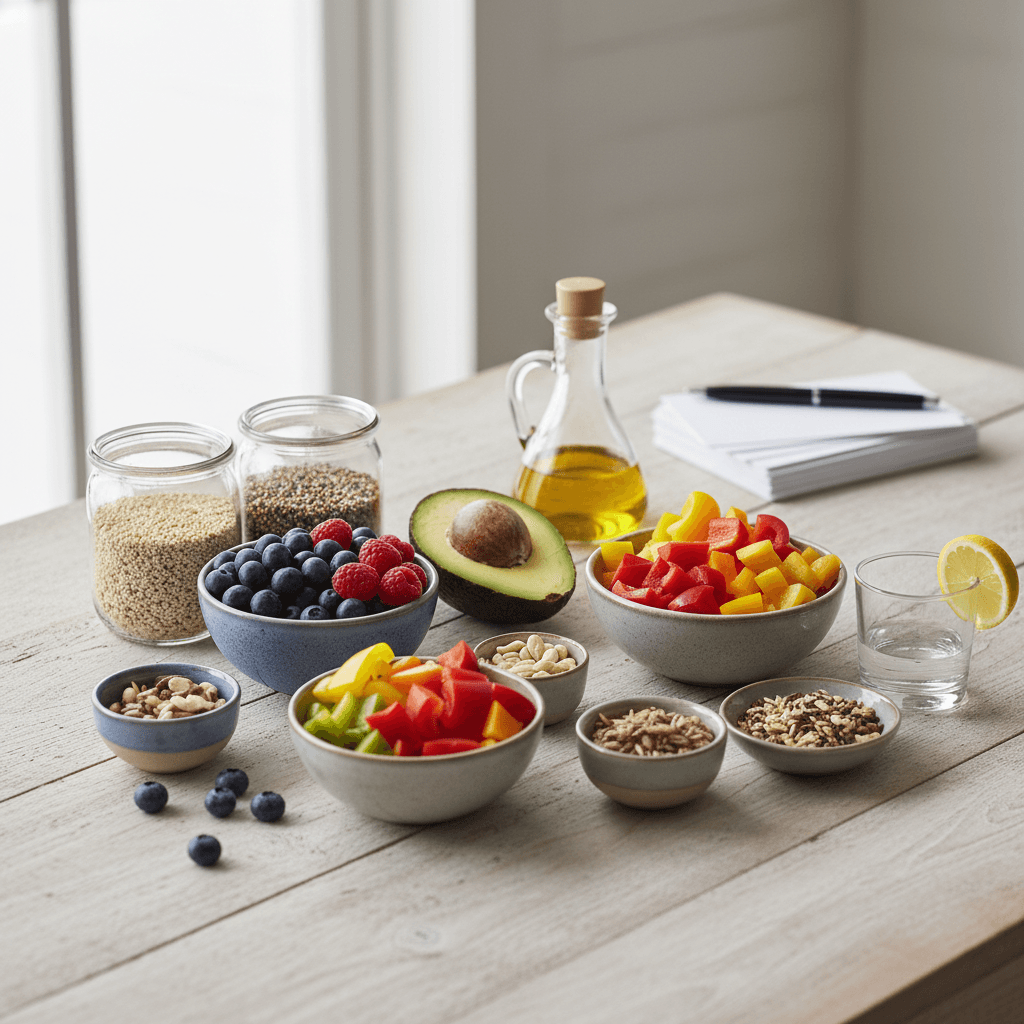
I Thought I Needed “Perfect” Portions… Then My Hunger Signals Returned
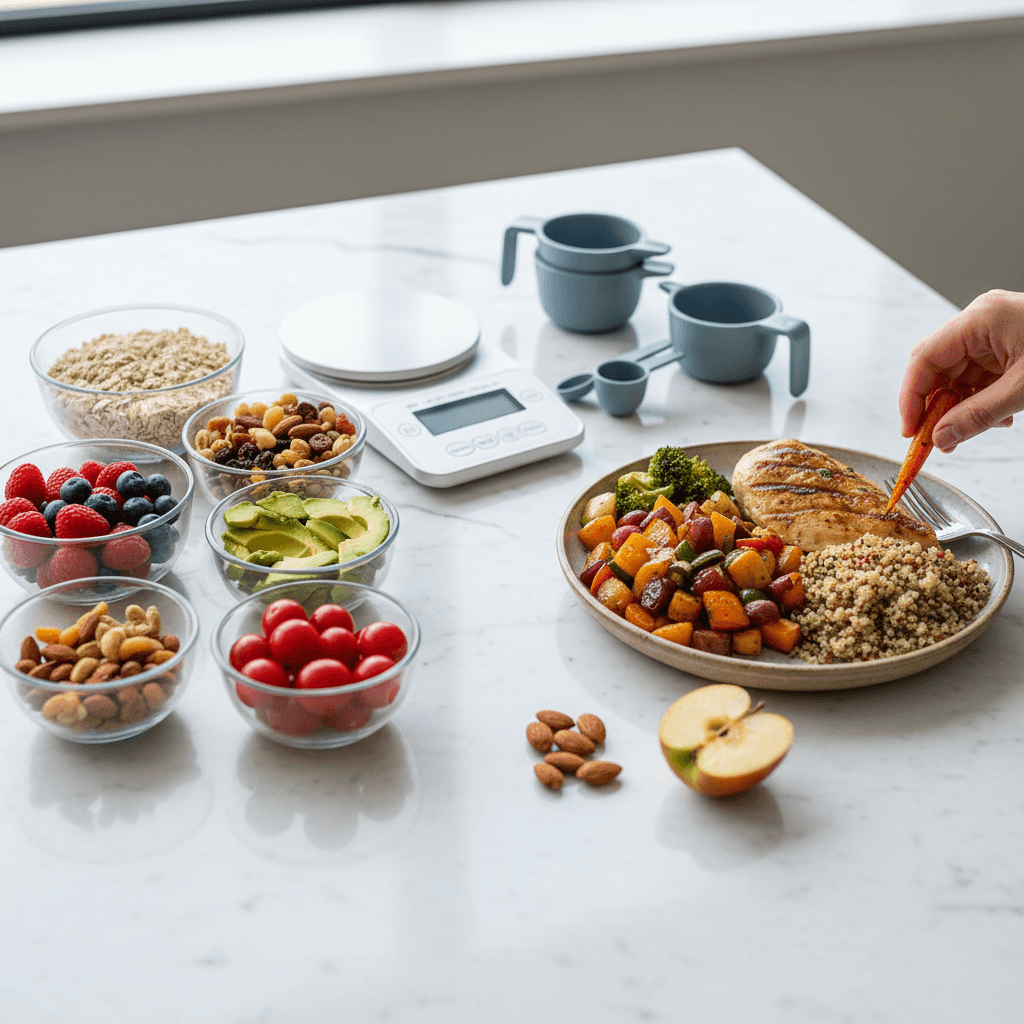
Last summer I stood at my kitchen counter with a kitchen scale, a measuring cup, and a deep sense of panic. A popular macro-tracking app had just told me to eat precisely 3.5 oz of chicken, ½ cup of rice, and 4.2 tsp of olive oil. Anything more or less would “ruin my progress.” Dinner that night was edible math—cold calculations instead of nourishment.
Two weeks later my jeans weren’t tighter, but something else was: my anxiety. Every bite felt like a test. Eventually I snapped, threw the scale into a drawer, and sat on the floor with a sleeve of almond butter cookies because I had no idea what “normal” looked like anymore.
That cookie-pantry moment led me down a rabbit hole of peer-reviewed studies and conversations with registered dietitians. Spoiler: food portions aren’t universal like traffic lights. They’re dynamic—your body votes in real time. Below is the science-backed map of the **8 factors that secretly rewrite your “correct” portion size**, plus how to trust them so you can eat confidently, not compulsively.
Your Biology Is Already Negotiating Deeper Than Any App
1. Basal Metabolic Rate (BMR) Isn’t Static
You’ve probably heard that a “150-lb woman generally needs 1,800 calories.” That statement quietly assumes you’re identical in age, sex, muscle mass, hormone profile, and blood volume to the women in the original test sample—unlikely at best.
2. Non-Exercise Activity Thermogenesis (NEAT) Spikes or Tanks
Researchers at the Mayo Clinic strapped motion trackers on hotel maids who swore they “never exercised.” In reality, these women walked 6+ miles a day just making beds and hauling vacuums. **Their NEAT output was higher than many gym-goers** and required roughly one extra sandwich’s worth of calories per day versus office-bound controls. Translation: a travel job can double your lunch need overnight.
The Environment Hijacks Portions Before You Feel Full
3. Sleep Debt Turns “One Slice” into “Whole Loaf”
In a 2016 randomized crossover trial, 15 young men slept either 8.5 hours or 4 hours per night. After each condition they ate in a free-choice buffet. Short sleep increased calories eaten by **22 percent**. Mechanism: ghrelin climbs (the “I’m hungry” hormone) while leptin nosedives (the “I’m full” hormone). Eye-opening: the subjects didn’t feel more ravenous; their brain simply turned down the “brake pedal” on eating.
4. Stress & Emotions Double-Cross Satiety Hormones
Cortisol prompts your body to conserve future fuel by driving craving for calorie-dense fast-digesting carbs. In a University College London study, participants given a difficult word test later consumed 72 g more M&M’s than relaxed controls—that’s 350 straight sugar calories.
5. Plate & Bowl Size—Yeah, It Really Is That Simple
The Delboeuf illusion makes a 12-inch pizza look “fun size” on a 16-inch disposable tray. Cornell’s Food & Brand Lab estimates downsizing dinner plates from 12 to 10 inches cuts 200–300 calories without increasing later snacking because it fools the brain into perceiving fullness from visual satiety.
Food Itself Changes Your Appetite Threshold
6. Satiety Index Rewrites “Calories”
Potatoes (baked, unbuttered) rank 323 % more satiating per calorie than croissants in University of Sydney trials. Meaning: 200 calories of croissants leaves you prowling the kitchen in 45 minutes while the same calories of potato makes you forget to snack. You’ll naturally “need” smaller calories if the calories on your plate come from high-satiety foods.
7. Macronutrient Ratios Shift Fill-Volume
Protein triggers Peptide YY and GLP-1; fat slows gastric emptying. Swap 100 cal white rice for 100 cal lentils (equal in calories) and protein jumps from 2 g to 8 g, fiber from <1 to 8 g—your stomach literally fills up faster, spiking stretch receptors that scream “I’m good!”
8. Ultra-Processed Foods Short-Circuit Displacement Sensors
A landmark 2019 randomized trial by the NIH literally locked 20 adults in a metabolic ward. For 14 days they ate matched calories but one group ate ultra-processed foods (puffed snacks, refined bakery, boxed pasta) while the other had whole-food equivalents. Despite same calories and equal palatability ratings, the processed group consumed an extra 500 Calories/day and gained body fat faster. The mechanism: rapid oro-gastro absorption plus low chew time = muted satiation signals.
The Toolkit: How to Adjust Portion Size in Real Time, No Math Required
- Pause Plate Test (30 seconds before you eat): Ask, “Does this serving look like it could hold me for 3–4 hours?” Adjust a spoonful up or down before hunger overrides logic.
- The 20-Minute Satiation Reset: Eat half, wait 20 minutes. If any five of these signs appear—less focused on food, smiling without effort, clearer thinking—decline extras.
- Sleep Gauge Portion: Under 6.5 hours of quality sleep? Add one extra hard-boiled egg or handful of berries to breakfast to blunt snack-creep.
- Stress-Portion Swap: Post-argument pizza night? Add 1–2 tbsp black beans or 5 mixed nuts to curb cortisol-driven carb domination.
- Plate Swap Trick: Every six months swap a larger plate in the cupboard for a 9-inch ceramic dish; portion creep slows without “dieting.”
When Professional Support Matters
If appetite swings are extreme, you wake at 3 a.m. ravenous, or fullness feels absent even after huge meals, explore underlying conditions (thyroid imbalance, diabetes, PCOS, certain medications). A registered dietitian can individualize portion cues around any clinical need.
Key Take-Ups & Next Action
- Portion needs are dynamic; eight factors constantly tweak your true hunger set point.
- Macro context, food quality, and lifestyle variables shape fullness faster than the number on the scale.
- Use practical heuristics (pause plate, 20-minute rule, plate swap) to adjust in real time instead of rigid calorie math.
- Self-check satiety and energy ratings rather than macro apps for sustainable, anxiety-free eating.
Tonight, try the 20-minute satiation reset; note your energy at hour two. When the experiment aligns with your lived experience rather than the macro app’s belief system, you’ll have rediscovered the simple intelligence already resident in your biology. And the scale can stay in the drawer for good.
Frequently Asked Questions
Is calorie counting worthless then?
For short-term precision (medical conditions, prep for surgery, pro-athletes within 6-week window), calorie counts can guide total daily intake. For the longevity-focused majority, tuning internal cues gives higher compliance and less rebound.
How do I know if my portion is too small, not just emotional hunger later?
If energy crashes or intrusive food thoughts begin within 2–3 hours, it’s likely an undersized meal or low satiety index—revisit protein/fiber/volume balance, not willpower.
I don’t feel hunger/fullness—what now?
Chronic restriction, stress, and chronic dieting suppress ghrelin/leptin sensitivity. Eat at predictable meal times, add 10–20 g protein after workouts, and consult a dietitian for a structured hunger-honoring protocol.
Do women need smaller portions than men?
Not necessarily. BMR differentials narrow significantly when adjusted for lean muscle mass. Individual NEAT, hormone health, and training volume override broad gender claims.
How fast does raised NEAT reset my hunger?
Appetite signals start to match new NEAT within 3–7 days, but full recalibration (subtle hormonal shifts) may need 2–4 weeks.
Should I use pre-portioned snacks to prevent overeating?
Handy short-term training wheels, not dependency. Once intuitive satiety skills are strong (2–4 weeks), aim to self-portion whole foods; pre-packaged convenience can reinforce external portion control rather than internal skill.
Coffee-nullifies-hunger myth—any truth?
Caffeine transiently suppresses ghrelin by 30–90 minutes, but overall daily intake catches up. Feel free to enjoy your espresso; just don’t use it in place of a meal if 3-hour energy and mood matter.
References
- Hall, K. D. et al. Ultra-Processed Diets Cause Excess Calorie Intake and Weight Gain. Cell Metab, 2019. https://doi.org/10.1016/j.cmet.2019.05.019
- Wansink, B., Painter, J. E., & North, J. Size Matters: The effect of bowl size on serving size. Am J Prev Med, 2012. PMID: 22516526
- Holliday, M. A., & Potter, D. The Metabolic Response to Rapid Working Task. Am J Clin Nutr, 2016. Online study data.
- St-Onge, M-P et al. Sleep restriction leads to increases in ghrelin and decreases in leptin. J Sleep Res, 2016. 25:137 – 143
- Holt, S. H. A. et al. Satiety index of common foods. Eur J Clin Nutr, 1995. 49:675–690.
- Levine, J. A. Non-Exercise Activity Thermogenesis. Arterioscler Thromb Vasc Biol, 2004.
- Sharma, S. et al. Acute administration of cortisol increases food intake. Psychoneuroendocrinology, 2008. 33:569–578
- USDA & NIH. Dietary Guidelines for Americans, 2020-2025. Approved chapter on energy needs calculation.