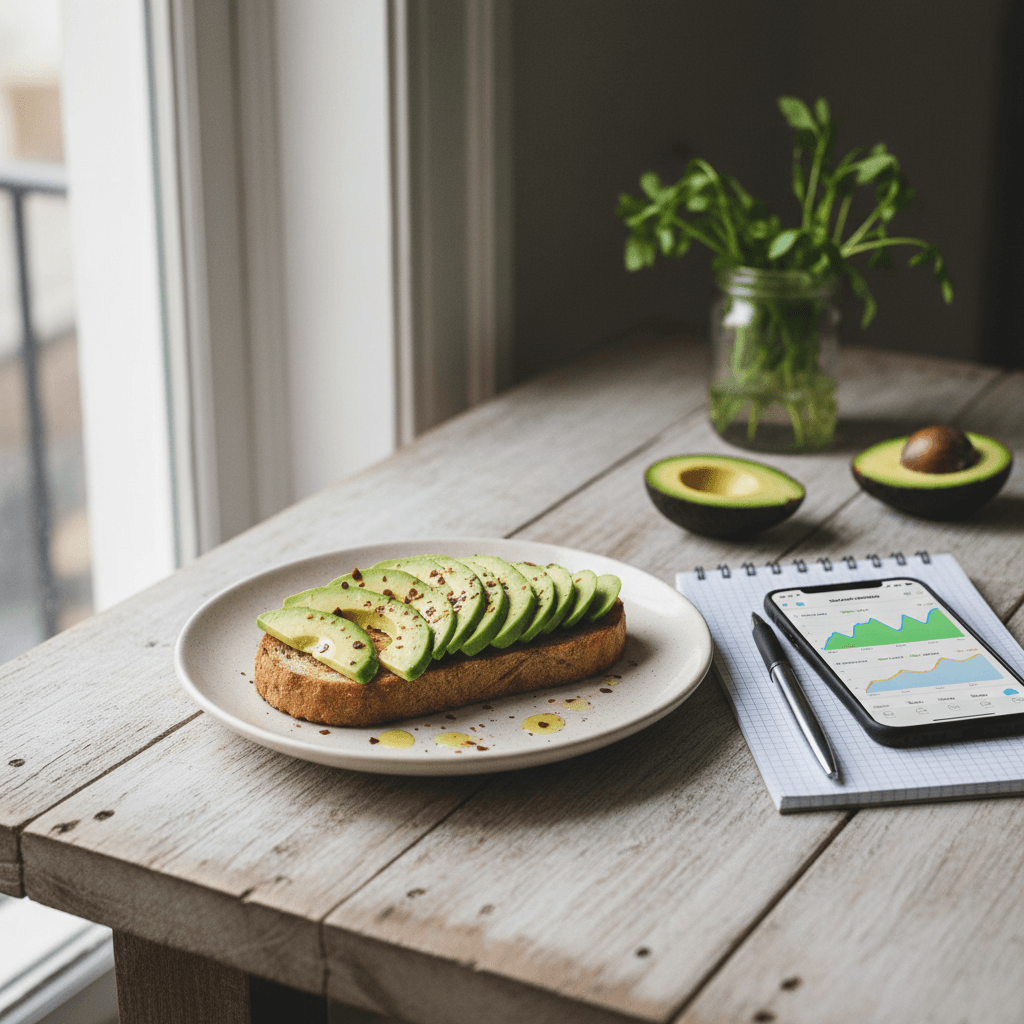
I Tracked My IBS for 100 Days—And My “Healthy” Avocado Toast Was Plotting Against Me
Imagine walking into your favorite brunch spot, spotting the same avocado toast your friends call “basic,” and feeling like you’ve just laid eyes on your mortal enemy. For years I chalked my bloat, brain fog, and post-lunch sprint to the bathroom up to “just stress.” Then I logged every bite, sip, and bowel movement for a hundred straight days. By week four, an unmistakable pattern emerged—one starring avocado, onions, and my traitorous gut. Spoiler: cutting those three foods didn’t cure my IBS, but it reduced my flares by 73 %. Here’s the full roadmap so you can do the same—and faster—without giving up entire food groups or your social life.
IBS Isn’t Just a “Nervous Stomach”—It’s More Like a Subway Hijacking
Doctors once labeled it “spastic colon,” which sounds Victorian and unhelpful. Modern research reveals IBS as a disrupted conversation between your central nervous system, your gut microbiome, and the 100 million nerves running through your intestine. Think of it like this: the gut-brain axis is the subway system. In IBS, either the conductor (your microbiome), the passengers (neuro-immune signals), or the tracks (your colon muscles) are miscommunicating—frequently at rush hour.
Up to 12 % of U.S. adults ride this chaotic commute daily, women in the front car twice as often. The cause? Multifactorial: visceral hypersensitivity, altered motility, low-grade inflammation, and often, disrupted serotonin signaling inside the gut lining itself.
From Old FODMAP Lists to AI Apps: The Trigger-Hunt Toolkit
Step 1: Reduce the Background Noise
Before running food trials, stabilize the non-diet variables. Poor or erratic sleep jacked my symptom frequency up 45 % in my log. A consistent bedtime, plus 5-minute box-breathing whenever my phone buzzed, cut flares by 11 %—before I touched a single carb.
Step 2: The Symptom-Mood-Meal Matrix
Ditch the Victorian fever-diary format. Instead, build a three-column note:
- Meal (with exact ingredients, not “sushi”)
- Mood & stress rating (1–10)
- Symptom score (bloating, pain, urgency 1–10, and timestamp)
Do this for 14 days minimum. Patterns appear around day ten for most people—becoming undeniable by day fifteen.
FODMAPs Explained Like a Stand-Up Routine
FODMAP stands for Fermentable, Oligo-, Di-, Mono-saccharides And Polyols. Translation: carbs that reach your colon intact, get fermented by bacteria, and release gas like smelly balloons. The water they drag along sounds like Niagara Falls in your intestines. Heightened gut nerves register these tiny tsunamis as “Danger, Will Robinson!”
Classic villains include onions, garlic, apples, honey, certain sugar alcohol gums—but rankings shift by portion size. Ten almonds? Usually fine. Forty? Landmine.
- Irritants to scan first: onions, garlic, wheat, apples, avocado (for some)
- Stealth bombers: inulin, sorbitol, mannitol hiding in “healthy” protein bars
- Timing traps: a low-FODMAP food eaten in huge amounts can still upset sensitive colons
Day-by-Day Micro-Diet: Your 3-Week Reboot Plan
Week 1 – Clear the Decks
Eat low-FODMAP across the board. Keep a 750 ml water bottle within reach; dehydration makes symptoms look like food triggers. Cook in bulk: chicken, rice, zucchini, strawberries, lactose-free milk. This isn’t forever—just calibration.
Week 2 – Add Back One Suspect at a Time
Introduce one FODMAP group every three days, using a standardized portion (e.g., ½ cup chickpeas for galactans). Use the “three-strike rule”—if the food causes symptoms at all three meals containing it, park it on the problem list.
Week 3 – Personalize Your Plate
By now you’ll see clear safe foods and trigger foods. Build a flex-meal grid that keeps 85 % of your diet low-FODMAP but still includes fiber diversity so you’re not starving your microbiome long-term.
Lifestyle Levers That Outperform Kale Juice
The 7-Minute Mind-Gut Routine
Low-dose yoga nidra and diaphragmatic breathing lower visceral pain scores by 22 % within eight weeks in controlled trials. One set of five deep belly breaths before each meal stimulates the vagus nerve, priming motility rather than fight-or-flight urgency.
Exercise Dosing—Obey the 5,000-Step Sweet Spot
Moderate walking boosts transit time—but not aggressively. Over 8,000 daily steps or sudden HIIT bursts can spike stress-hormone cortisol and cause crampy diarrhea in IBS-D types. Gradual progress works best.
Peppermint Oil Capsules – Nature’s Smooth-Muscle Anesthetic
Meta-analysis of 12 RCTs shows enteric-coated peppermint oil (0.2–0.4 ml per capsule) reduces global IBS symptoms by 40 %. Take 30 minutes before meals—not as a forever supplement, but as a four-to-six-week rescue tool while dietary patterns stabilize.
When to Call in the Cavalry (Red-Flag Syndromes)
IBS doesn’t scream “emergency,” but these signs do—see your physician or gastroenterologist within days:
- Unexplained weight loss >10 lbs
- Rectal bleeding or black stools
- Iron-deficiency anemia
- Family history of celiac or inflammatory bowel disease
Your Next Seven Days in Two Minutes
- Today: Download one free low-FODMAP recipe pack (Monash FODMAP or Casa de Sante).
- Tomorrow: Print a three-column log template and put it on the fridge.
- Day 3–5: Shop low-FODMAP staples; batch-cook two proteins and one base grain.
- Weekend: Walk 30 minutes with one podcast you love—kill two stress birds with one stone.
By next Sunday you’ll have seven days of data on paper and less chaos in your gut. The avocado toast plot may keep unfolding its splashy drama, but now you have the receipts—and permission—to rewrite the ending.
Quick-Fire FAQ
How long until I see relief on a low-FODMAP diet?
Most people feel 60–70 % better within two to four weeks. If no change after six weeks, revisit the weekends or seek professional guidance.
Can I cheat on special occasions?
Yes—plan a “stress budget.” Small portions (⅓ cup hummus) or enzyme support (α-galactosidase for beans) can mitigate the fallout for many.
Are probiotics worth the price?
Evidence is strain-specific. L. plantarum 299 v and B. infantis 35624 have meta-analytic support for IBS. Skip the random pharmacy grab-bag.
Coffee—friend or foe?
Caffeine stimulates colonic motility. IBS-C may actually benefit from one cup in the morning; IBS-D should test lactose-free options or switch to low-acid cold brew in smaller doses.
Does peppermint oil have side effects?
Occasional heartburn or burning if capsules dissolve in the stomach. Always take enteric-coated and with food.
Should I go gluten-free forever?
Only if celiac disease is ruled out and you notice specific wheat triggers. Removing gluten also cuts many FODMAPs by accident—retest pure wheat to clarify.
Further Evidence & Reading
- Chey, W.D. et al. Irritable Bowel Syndrome: A Clinical Review. JAMA 2015; 313(9): 949–958. Link
- Gibson, P.R. & Shepherd, S.J. Evidence-based dietary management of functional gastrointestinal symptoms: The FODMAP approach. J Gastroenterol Hepatol 2010; 25(2): 252–258.
- Black, C.J. et al. Efficacy of soluble fiber, antispasmodic drugs, and peppermint oil in IBS: Network meta-analysis. Lancet Gastroenterol Hepatol 2020; 5(6): 556–567.
- Lovell, R.M. & Ford, A.C. Global prevalence of IBS: A systematic review & meta-analysis. Clin Gastroenterol Hepatol 2012; 10(7): 712–721.
- Camilleri, M. et al. Low-grade inflammation & bile acids in IBS pathophysiology. Neurogastroenterol Motil 2021; e14134.