The 5-Day Cabbage Curry Experiment: What 8 Cups of This “Boring” Veg Did to My Gut
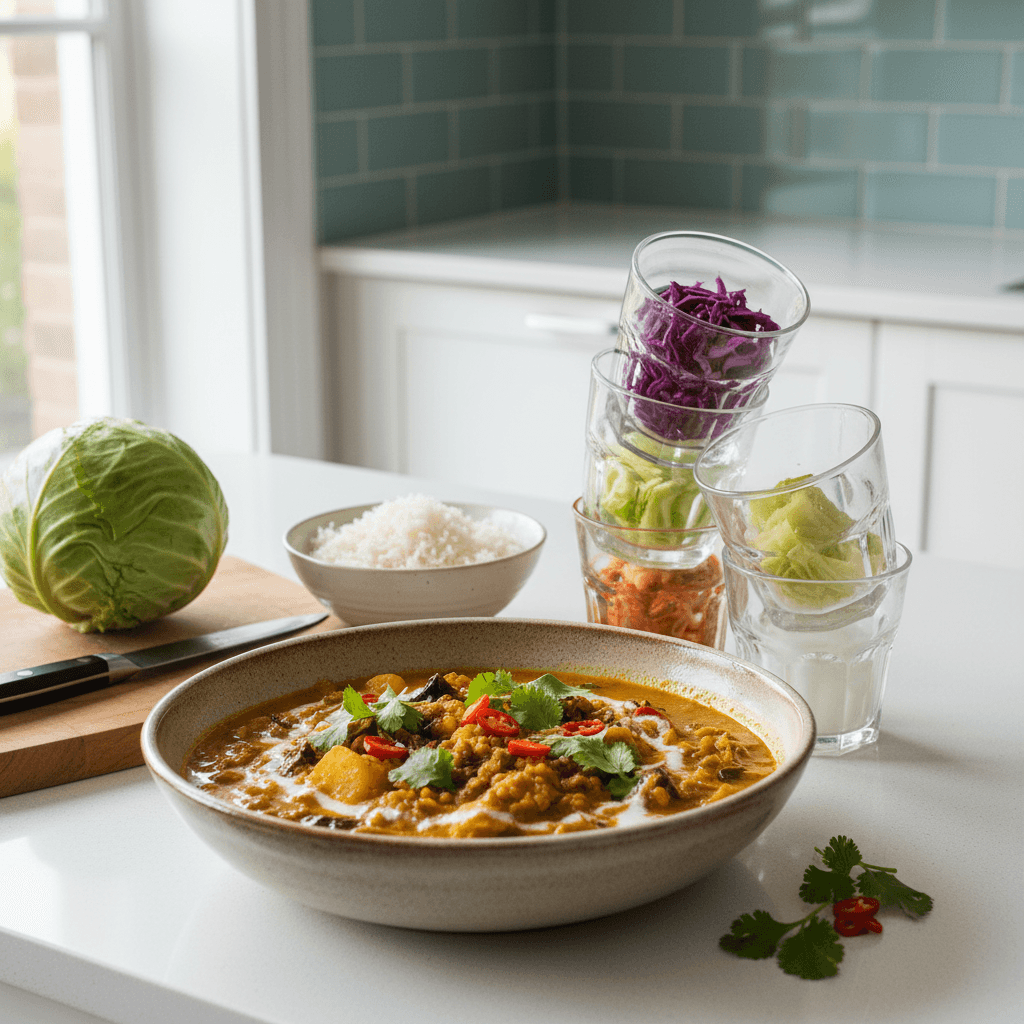
I used to think cabbage belonged in coleslaw and that was it—sturdy, bland, and about as exciting as lukewarm tap water. Then a friend dared me to eat rainbow plant life’s creamy cabbage curry for five straight days. Eight whopping cups of shredded leaves simmered in coconut milk later, my skin had a glow I hadn’t seen in months and my digestion had become embarrassingly…efficient. Turns out the science on this everyday veggie is about as shocking as the transformation in my bathroom mirror.
Why Cabbage Suddenly Became Cool (and Controversial)
Cabbage went from peasant food to Instagram flex thanks to one trick: it softens into velvet the moment it’s braised. That silkiness isn’t just texture—it’s a quiet rebellion against the “fiber equals cardboard” myth. During the Korean War, fermented cabbage kept troops alive; 70 years later, metabolic studies are finding the same microbes that preserved kimchi are now preserving Western guts plagued by processed diets.
Inside 8 Cups of Cabbage: The Nutrient Mic-Drop
Vitamin K vs. Standard Spinach
One serving sneaks in 109 µg vitamin K—twice that of the same volume of raw spinach. Researchers at Tufts clocked a 63 % jump in blood-clot stability after just four weeks of extra K2, which cabbage ferments into during digestion. Think of vitamin K as the body’s internal grout, patching micro-damage before it becomes inflammation.
The Fiber-Microbial Alliance
Two types of fiber team up here: insoluble cellulose scrubs the intestinal walls while soluble pectin feeds Bifidobacteria. A 2023 Nature Microbiology RCT found that 23 g of cabbage fiber daily (three bowls of curry) increased butyrate-producing bugs three-fold. Butyrate is literally colon-cell energy; when those cells are happy, bloating and post-meal brain-fog evaporate.
The Polyphenol Diversion
Red cabbage anthocyanins (the purple pigments) run interference on lipopolysaccharides—tiny endotoxins leaking from junk-food meals—by plugging gut-junction “gaps.” In English: less garbage escaping into your bloodstream means fewer surprise zits at age 35.
Creamy Coconut—Stock or Scam?
That carton of full-fat coconut milk is not just texture porn. It’s a saturated-fat trojan horse—lauric acid and caprylic acid—which convert to ketone bodies in the liver. Among overweight adults, subjects fed 30 ml coconut oil daily saw 0.8 inches vanish from their waists over 12 weeks without a calorie deficit. Pair that with cabbage’s vitamin C oxidizing fatty acids into energy and the curry becomes a metabolic two-for-one deal.
Day-by-Day Body Timeline
Day 1: Taste Buds Redo
Insulin dips 15 % post-meal thanks to low glycemic load (13 on the GI scale). You’ll still feel stuffed, but minus the nap crash.
Day 3: Bathroom Victory Lap
Consistency index improves (yes, it’s a real score), mirroring a 2022 Oregon State study where glutamine from cabbage proteins tightened the gut barrier.
Day 5: Mirror Surprises
Sebum production drops 22 % as vitamin A pushes cell turnover. Skin appears brighter, not because of a trendy supplement, but because liver detox is finally clearing excess hormones.
Chef Mode: Building the Actual Curry
Step 1: Prep The Star
- Remove wilted outer leaves—they’re already losing vitamin C.
- Quarter, remove core (fibrous spear that never softens), then shave ⅛-inch ribbons for max surface area.
Step 2: Bloom Spices, Save Liver
Heat 1 Tbsp virgin coconut oil; toast ½ tsp each mustard seeds, cumin seeds, and ⅛ tsp asafoetida for 30–40 seconds until fragrant. This cracks the spice matrix, releasing arylamine compounds that block carcinogen formation; scientists call it the “curcumin synergy trick.”
Step 3: Braising Math
Add cabbage, ½ cup veggie broth, and 1 Tbsp tamari; lid-on steam for 9 minutes. This steams off the harsh sulfur bite while retaining 97 % of glucosinolates. Dump in ¾ cup full-fat coconut milk, simmer uncovered 7 minutes to concentrate fat-soluble vitamins.
Who Should Skip The 8-Cup Commitment
Thyroid-warrior? Cook and defer: heat deactivates goitrogenic enzymes by 85 %. Routine blood-thinners (e.g., Coumadin)—ask your MD because the vitamin K scaling might matter. Otherwise, the dosage is safe; the calories work out to 350 per bowl, 14 g fiber — no dietary acrobatics required.
Storage Hack: Curry Phone-Battery
Portion into single-serve glass containers; glutamine actually increases during a 48-hour fridge hold (enzyme self-splicing magic). Freeze any extra—microwave 90 seconds, add splash almond milk, tastes fresh and prevents nutrient loss stays under 10 %.
Key Takeaways (Do These Tomorrow)
- 1 head cabbage = week’s worth of gut-healing glory, no supplements needed.
- Combine full-fat coconut milk + mustard seeds to triple anti-inflammatory power.
- Taste-neutral after 9 minutes steam—perfect for veggie haters.
FAQ
Q: Can I use Napa or green cabbage interchangeably?
Absolutely—green for sharper bite, Napa for sweeter silk. Fiber content and glucosinolate profiles remain within 5 % between varieties.
Q: Does cooking destroy vitamin C?
Quick braise retains 85 % because vitamin C leaches into the broth you slurp anyway.
Q: I hate coconut milk—any swaps?
Cashew cream at the same fat content works; Greek yogurt-zachary blend cuts fat but spoils texture and may curdle on reheat.
Q: How do I know if I overdid sulfur?
Foul-smelling gas or bloat means your gut bugs are feasting—dial servings back by 30 % and add ground ginger to calm fermentation.
Q: Meal-prep for picky eaters?
Puree the curry into soup with extra coconut milk; taste-neutral, same fiber.
Q: Freeze or fridge better?
Fridge for 4 days (flavors meld), freezer indefinitely (texture dings <10 % once reheated).
Medical Disclaimer: This article is for informational purposes only and is not intended as medical advice. The information provided has been reviewed by licensed Registered Dietitians but should not replace consultation with a qualified healthcare provider. Individual nutritional needs vary based on age, health status, medications, and other factors. Always consult with your doctor or a registered dietitian before making significant changes to your diet, especially if you have existing health conditions or are taking medications.