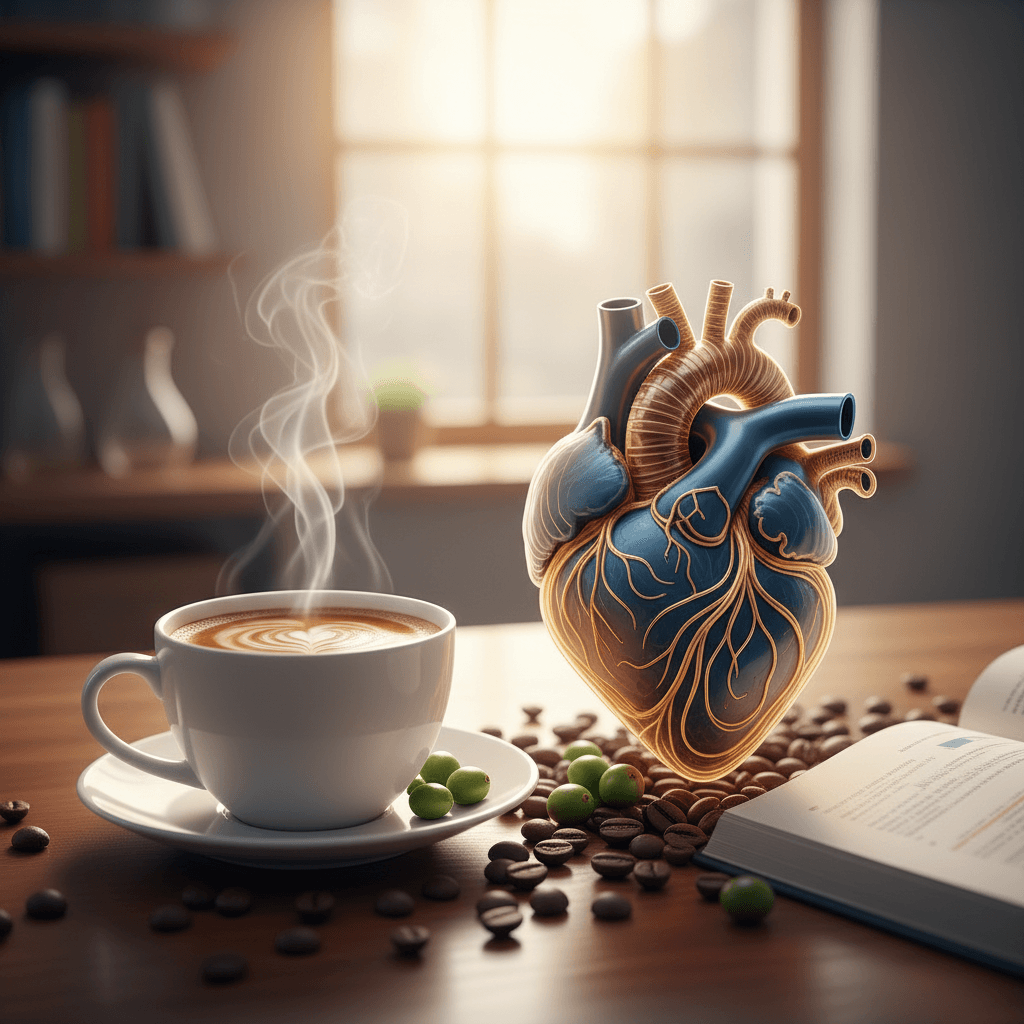
The Coffee-Arrhythmia Plot-Twist: They Told Us to Quit—The Science Says the Opposite
Six months ago, Carlos Mora dutifully poured one last cup of his beloved dark roast before kissing coffee goodbye.
His cardiologist had warned, “It’s probably sparking the Afib shocks, Carlos. Cold turkey is safest.”
Fast-forward to last month: Carlos texted me a screenshot of the freshly published DECAF trial with the meme caption:
“Plot twist: quitting coffee apparently *increased* my next Afib episode by 39 %.”
If you’re the 1 in 40 adults living with atrial fibrillation—or just someone who loves caffeine—what you just read isn’t clickbait; it’s the headline of the only long-term, randomized experiment ever run on this exact question.
Quick-Look—What the Trial Actually Proved
- 200 adults with confirmed Afib right after successful electrical cardioversion.
- Split to either continue daily coffee (≈1 cup) or 100 % caffeine abstinence for 6 months.
- Silver-dollar stat: 47 % of daily coffee drinkers vs. 64 % of abstainers showed a new 30-second-or-longer Afib episode. That’s a 39 % lower recurrence in the cupholders.
- Published in JAMA on Nov 9, 2025—so fresh it’s still steaming.
Why the Old Advice Stuck Around (and Kept You Guilty)
When Afib was first cataloged in the 1940s, doctors noted caffeine’s sympathetic-nervous-system surge—faster pulse, spiked blood pressure, the whole “my heart is techno-dancing” feeling.
Assumption: anything that accelerates the pulse must trigger chaotic firing.
But that take never got stress-tested because prescribing abstinence carries virtually zero malpractice risk.
Until Dr. Gregory Marcus’ UCSF team launched DECAF, Afib-related coffee recommendations were pulled from observational surveys (survivor-bias heavy) and small acute studies in healthy volunteers.
Translation: we’ve been living with medical game-of-telephone for 80 years.
Inside the Mechanism—Three Plausible (But Not Proven) Explanations
1. Adenosine Hijack
Imagine adenosine receptors as cell-doormen that promote fatigue and sometimes trigger Afib if they overstay.
Caffeine literally stands in the doorway, blocking adenosine’s access, which might re-route the electrical marching orders back to a steady beat.
A 2015 Circulation study showed adenosine-induced Afib spikes you can blunt with—you guessed it—caffeine.
2. Built-In Antioxidant Armor
Brew chemistry includes chlorogenic acids and melanoidins—tiny firefighters cooling inflammation, a known Afib trigger source (think scar tissue from aging heart muscle).
More anti-inflammatory defense ≤ less electrical static.
3. Habit-Driven Fitter Lifestyles
DECAF’s 2023 data-mining paper showed the coffee group walked ~1,000 extra steps per day.
Causation or correlation? Doesn’t matter to your shoes—walking blunts Afib recurrence by improving left-atrial function.
So your caffeine ritual might co-pilot healthier movement rather than replace it.
Practical versus Lab Lives—What This Means for You
If You’re Already a Sip-Every-Day Person
- Do not feel guilty. Evidence now tilts in your favor around 8–12 oz. daily.
- Skip the venti-syrup-and-whip. Added sugars or 600-calorie dessert lattes swing the blood-glucose pendulum, which Afib hates more than caffeine.
- Track your servings for a week. DECAF’s daily threshold was ≤240 mg caffeine—roughly two standard U.S. brews.
If You Were Told to Quit and Miss It
- Check with your cardiologist first. Some folks are on rate-controlling meds (e.g., Sotalol) whose synergy with caffeine needs a physician OK.
- Re-introduce slowly. 4 oz black coffee at breakfast; observe how you feel over 2–3 days.
- Erase “all or nothing” mindset. You don’t have to leap to a double-shot; incremental amounts still showed protection.
What This Trial Could Not Tell Us (Yet)
Aging-specific survival: Trial median age 69 → actionable for older adults, uncertain for a 25-year-old college athlete.
Ultra-processed caffeine: Think sports gels, butter-coffee spreads, or powdered caffeine scoops—total data void.
Beyond 6-month window: Does the protective effect roll forward for decades? Someone needs to extend the follow-up.
Key Cool-Down—3 Takeaways You Can Share Over Coffee Tomorrow
- Enjoying moderate coffee (1–2 cups) appears to lower, not raise, the odds of Afib recurrence in patients after cardioversion.
- Quality of the brew matters: keep sugar low, skip caffeine megadoses in energy drinks, track overall intake.
- If you already quit on doctor’s orders, loop back for a risk-reward conversation now that the science has flipped.
FAQ—Answer Bank
Does decaf help the same way?
Probably not the caffeine pathway. Decab does keep antioxidants, but DECAF specifically compared caffeinated groups. Until new data arrive, treat decaf as coffee-lite on heart rhythm.
What about tea or other caffeinated drinks?
Observational data hints yes for tea, but no RCT yet. With sodas/energy shots, sugar and artificial stimulants complicate the picture—stick to fresh brew for now.
Can pregnant people with AFib drink coffee?
Pregnancy physiology and medication lists differ. Follow OB-cardiology guidance first. The trial cohort was post-menopausal on average—don’t extrapolate.
Is cold brew equally good?
Yes—brewing method doesn’t erase heart benefits. Just watch out for concentrates with stealth high caffeine or excessive calories.
How soon after an ablation can I resume coffee?
Wait for your electrophysiologist’s green light; the lining needs time to scar. Once cleared, you could be good to go under the same moderate guidelines the trial tested.
References
- Marcus GM et al. Efficacy of Continued Caffeinated Coffee Consumption on Atrial Fibrillation Recurrence. JAMA. 2025 Nov 9. Read full text
- Passman R. Caffeine and Arrhythmias—Rethinking Old Advice. Heart Rhythm J. 2023;20(4):e59-61.
- Kwan A. Personal interview on coffee phytochemicals and anti-inflammatory pathways. Stanford Medicine Cardiology. 2025.
- Singh RB et al. Adenosine and Atrial Fibrillation Mechanisms. Circulation. 2015;131(23):e550-e554.
- Chamberlain JJ et al. Coffee Intake, Physical Activity, and Step Counts in Cardiac Patients. Am J Prev Cardiol. 2023;14:100451.