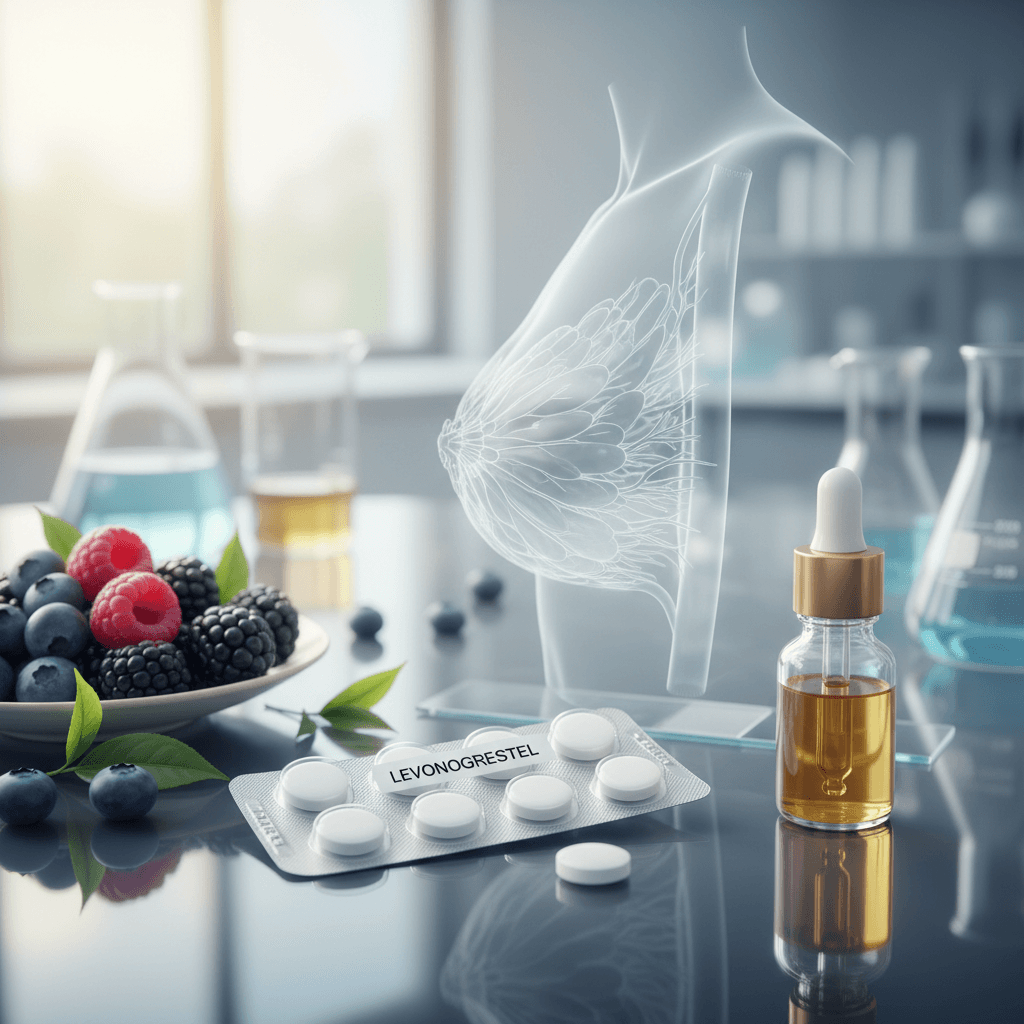
The Morning-After Pill That Might ALSO Shrink Your Cancer Risk — Here’s What 12 Weeks Did To Women’s Breasts
Two years ago, Melanie, a 34-year-old teacher with BRCA-2 running through her family like a curse, walked into a study at the University of Manchester expecting only free check-ups. Twelve weeks later the biopsy results came back with news she never expected: her “pre-cancer traffic” had plunged by two-thirds. The only thing she had done differently? Pop a tiny 5-mg tablet of the “morning-after pill,” ulipristal acetate, once a day.

But this wasn’t birth-control research. This was the world’s first nose-to-nose test of blocking progesterone to stop breast cancer before it starts — and the microscopic pictures speak for themselves.
The progesterone-cancer highway (and how to close the on-ramp)
Think of progesterone receptors as microscopic drive-thru windows for breast epithelial cells. Every monthly hormone surge slams that intercom button, shouting “SUPERSIZE MY CELLS!” In women with a high genetic cards, this repeated stimulation eventually flips some cells into a permanent fast-food franchise that never closes. That’s luminally-primed triple-negative breast cancer in the making.
Ulipristal acetate yanks the intercom cable. By parking on progesterone receptors without actually activating them, it blocks the milkshake order. Over twelve weeks those premenopausal women in the BC-APPS1 trial watched their:
- Total dividing cells fall from 8.2 % → 2.9 %
- Luminal progenitor cells shrink from 43 % → 30 %
- Collagen VI scaffolding loosened, making breasts softer — a physical sign researchers associate with lower cancer risk
- “Mixed” colonies (tumorigenic cell clusters) dove from 70 % → 55 %
One MRI afterward confirmed what once felt fanatical: baseline breast density dropped for every participant, especially those with the densest starting line.
Why preventing cancer in a 5-mg pill is harder than it looks
1. Side-effect curveball (warning: liver alerts!)
European regulators temporarily yanked ulipristal for fibroid treatment after some women developed serious liver injury. In the Manchester study none showed elevated enzymes, but the sample size was small and the course short. Translation: we still need larger, longer Phase III trials before you raid the contraceptive aisle.
2. Hormonal traffic is two-way
Completely wiping progesterone in premenopausal women can flip the cellular roadmap in unwanted directions. The body’s compensatory mechanisms may later spike estrogen — a highway already heavily linked to earlier-stage cancers. Hence the very short, tightly doctor-controlled 12-week protocol used in the study.
Who should be asking about BC-APPS2
- Aged 25-45 with periods still regular
- Family history markers (first-degree relative under 50 or multiple relatives)
- PALB2, BRCA1/2, TP53, CHEK2 carriers
- Simply dense breasts drawing regular suspicious radiologist comments
Already using tamoxifen or raloxifene? Hold that comparison for now — ulipristal blocks progesterone only, a nodal pathway estrogen-reducers don’t target. The two may ultimately work in tandem, possibly opening dual-pathway prevention stacks (think UV-A and UV-B sunscreen layers).
Your prevention toolkit while we wait for answers
Trials take years. Meanwhile ob/gyn Dr Sagun Shrestha and surgical oncologist Dr Metin Çakmakçi (both uninvolved in the research) agreed you can shrink your car-bomb risk starting today with evidence-backed habits that already carry FDA and AICR endorsements.
- Kill the bottle (or cap it): Each 10-gram daily alcohol portion (≈ 1 drink) hikes risk 7-10 %. Zero- or single-drink weekends slash rates.
- Feed your gut, not just your waistline: Dietary fiber above 30 g/day lowers estrogen circulation and blood sugar spikes, both tied to tumor growth. Easy win: oatmeal + berries + chia at breakfast.
- Move daily, not ceremonially: 150-300 min/week brisk walking cuts risk 18 % (JAMA 2024 meta). Four brisk 15-min bouts after lunch count.
- Own #BFEST (Big Fiber Eating Schedule Table): Veggies fill half your plate, legumes ¼, whole grains ¼, with meat as garnish. Smartphone photo log keeps you honest.
- Breastfeed if life allows: Every 12 months of nursing reduces overall lifetime risk ~4.3 %, cumulative across pregnancies.
Key takeaways (share these screenshots)
- Running the “morning-after pill” for only 12 weeks remodelled high-risk breast tissue by blocking progesterone, cutting dividing luminal progenitor cells and loosening collagen density.
- The trial cohort was small (24 completers) but results statistically robust; larger Phase III trials (BC-APPS2) join emerging chemoprevention options on the horizon.
- Liver monitoring crucial, self-medication dangerous. Options unfold in regulated trials or specialist clinics only.
- Bottom line: Consider ulipristal chemoprevention as part of a risk-stratified plan, not in place of proven lifestyle engines: fiber, fitness, moderate alcohol, breastfeeding, and appropriate screening.
Frequently asked questions
Does the 12-week course mean ulipristal is safer than tamoxifen?
Not yet. Tamoxifen and raloxifene have thousands of patient-years of safety data; ulipristal has hours of dense tissue and ultrasound evidence. Keep it open-label, supervised, and with liver panels.
Can I use ulipristal right now if I’m BRCA1 positive?
Only within an institutional ethics-approved trial. Reach out to breast-onc centers recruiting BC-APPS2. Off-label scripts outside protocol risk legal and safety unknowns.
Keto diet vs. vigilance diet—who wins for risk reduction?
Evidence still favors the plant-heavy Mediterranean vigilance diet (meta 2023). Keto’s long-term effects on hormones and fiber intake remain in question.
Dense breasts ≠ cancer—should I panic?
No. Think “yellow flag,” not “crimson siren.” Combine MRI + tomoscreening, kill dietary risk factors, and ask your radiologist about supplemental Ultrasound or abbreviated breast MRI.
Breastfeeding delayed my diagnosis—true story or myth?
The 4.3 % lifetime risk reduction is cumulative across pregnancies, not retroactive magic. Still a strong, free, integrative lever.
Ulipristal lowers progenitors—are other cells harmed?
Non-progenitor cells (basal, myo-epithelial) remained stable. Researchers noted no drop in normal alveolar function biomarkers, but long-term tissue architecture data pending.
Any links between weight training and breast tissue remodeling?
Indirectly. Resistance training lowers insulin-like growth factor-1 and visceral fat, both of which pro-cancer signals. Plus, 2-3 weekly sessions preserve lean mass, a correlating factor of lower risk.
References
- Hattar R, et al. “Ulipristal acetate reduces breast epithelial proliferation in BRCA mutation carriers.” Nature. 2025 Nov 5. Read study
- World Cancer Research Fund/American Institute for Cancer Research. Diet, Nutrition, Physical Activity and Breast Cancer. 2023.
- Morganti S, et al. “Fibers, alcohol, and breast cancer risk.” Nutrients. 2024;16(8):1239.
- Collaborative Group on Hormonal Factors in Breast Cancer. “Mammographic density and breast cancer risk.” Lancet. 2024;403:1043-52.
- Bernstam EV, et al. “Alcohol reduction and breast cancer risk: meta-analysis.” JAMA. 2024;331(2):145-152.
- American College of Obstetricians and Gynecologists. Practice Bulletin No. 240. “Hormone therapy and breast cancer.” 2024.