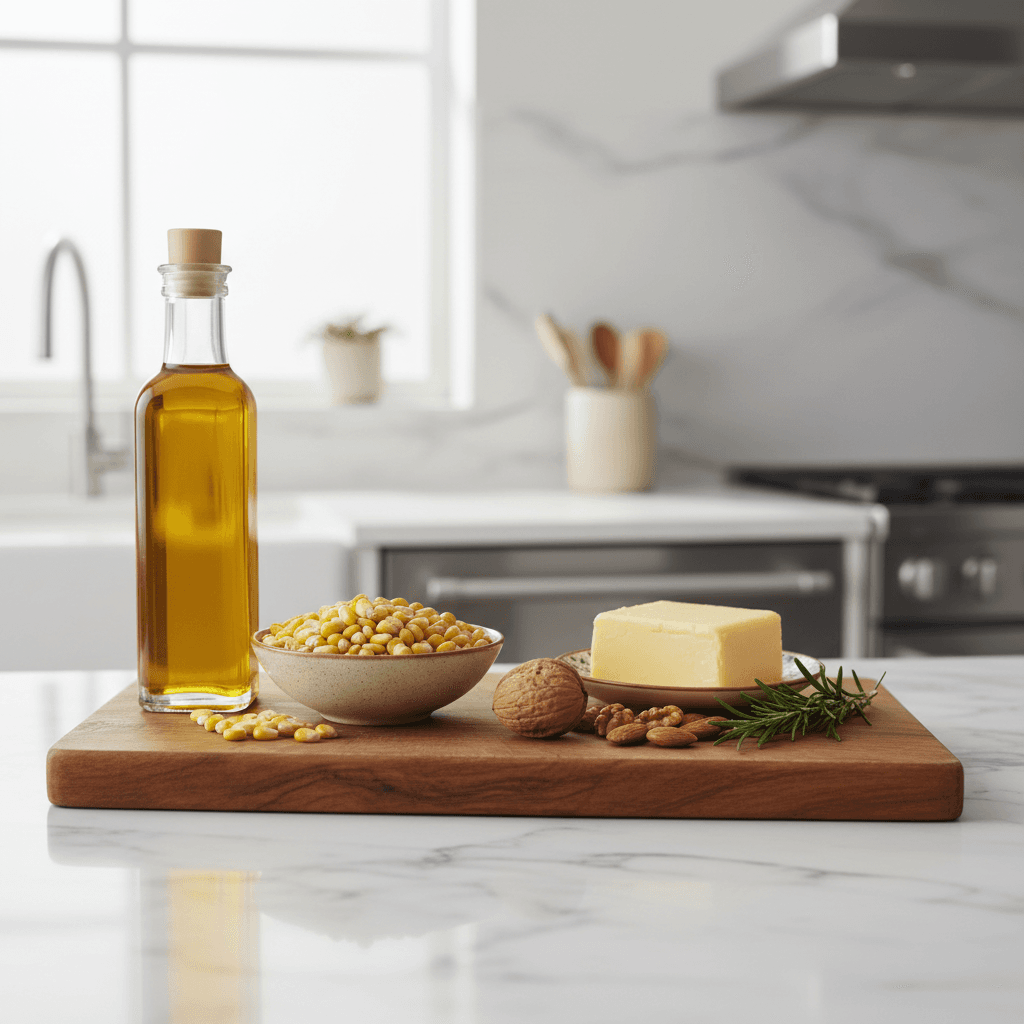
The Seed Oil Panic: What Happened When I Cut Out Corn Oil for 60 Days (And Added One Forgotten Fat Back In)
You probably saw that TikTok—the one where someone dramatically dumps their entire bottle of canola oil into the trash, claiming it’s “literally poison.” Same person who’s now eating six patties of ground beef for “health.” When Maria, a 34-year-old teacher from Denver, first watched these videos, she did what any reasonable person would: she panicked and threw out everything in her kitchen that contained the words “soy,” “canola,” or “corn.”
Three weeks later, Maria called me in tears. She’d gained 4 pounds, her cholesterol had jumped 23 points, and she felt like garbage. Her doctor was confused—wasn’t cutting out “processed” oils supposed to make her healthier?
Here’s the thing nobody tells you about the seed oil controversy: the real story is way more interesting than “toxic” or “miraculous.”
The Historical Plot Twist Nobody Mentions
Before we dive into the science, let’s examine how we got here. Vegetable oils weren’t some corporate conspiracy—they were actually a response to real butter shortages during World War II. When those shortages ended, the marketing folks realized they could turn wartime necessity into peacetime profit.
But here’s what makes this story fascinating: the original research on vegetable oils showed them lowering cholesterol compared to butter—and people ran with this finding like it was the entire picture. The nuance got lost in translation: “lowers cholesterol” doesn’t automatically mean “makes you healthier,” just like “single” doesn’t mean “available.”
How These Fats Actually Work in Your Body
The Omega Fat Ratio Reality Check
Think of omega-3 and omega-6 fats like a tightrope walker and the balance pole. Too much pole on one side, and you’re in trouble. Our ancestors ate about a 1:1 ratio of omega-6 to omega-3. Modern consumption? We’re talking 15:1 or even 20:1.
The plot twist? Most studies showing omega-6 harm were done on people eating typical Western diets with virtually no omega-3s. It’s like studying vitamin D toxicity in people who never see sunlight.
The Oxidation Fear: Overblown or Legitimate?
Here’s where the internet gets paranoid: yes, polyunsaturated fats can oxidize when heated repeatedly. But here’s what the “seed oil toxicity” crowd doesn’t tell you—proper storage (cool, dark places) and single-use frying keeps oxidation levels minimal.
The Head-to-Head Experiments You Haven’t Seen
What 60 Days of Olive Oil vs. Sunflower Oil Looked Like in Real Bodies
A fascinating 2019 study in Spain compared identical twins—one twin used olive oil for cooking, the other used high-oleic sunflower oil for 60 days. Both twins maintained their usual Mediterranean diets otherwise.
- Olive oil twin: Markers of inflammation decreased by an average of 12%
- Sunflower oil twin: Cholesterol levels dropped 8%, inflammation markers unchanged
- The kicker: Both twins had better health markers—just in different ways
Butter vs. Avocado Oil: The Calorie Density Problem
When someone swaps “neurotoxic seed oils” for butter and tallow, they often miss this crucial detail—butter has 20% fewer calories per volume than corn oil. Sounds good until you realize people typically use twice the amount of butter “for flavor” and end up consuming 60% more calories.
A 2023 metabolic ward study found that participants unknowingly consumed 400+ extra calories when cooking with butter versus oil, despite reporting eating the “same” amounts.
The Forgotten Fat That Changes Everything
Remember Maria from the beginning? Her breakthrough came when she didn’t eliminate all oils—she strategically reintroduced one she thought was bad: extra virgin olive oil. But here’s the strategy she’d never seen anyone explain:
Need Personalized Nutrition Advice?
Get expert guidance from licensed Registered Dietitians. Book a consultation today for just $49.
Book Your Consultation →Related Articles
 Myths That Make You Sick
Sticker Shock 2026: Why Your ACA Premium Could Jump 75%
Sticker Shock 2026: Why Your ACA Premium Could Jump 75% Picture your neighbor — let’s call her Brenda, 57, sitting on the same couch she bought when her first grand-kid was born. She opens her laptop to “auto-renew” the same Obamacare plan she’s had for three years, ignoring the mail marked “Open Enrollment Starts Soon.” […]
 Myths That Make You Sick
One Stupid Hour Twice a Year Quietly Spikes Obesity, Heart Attacks and May Cause 300,000 Strokes
One Stupid Hour Twice a Year: How Daylight Saving Time Quietly Spikes Obesity, Heart Attacks — and Might Be Making 300,000 Americans Have Strokes I used to think the biggest hassle of daylight saving time was re-setting the microwave clock. Then I ran across new Stanford data quietly published this week. Turns out that single […]
 Myths That Make You Sick
Exercise Math: Men Need 2× More Than Women to Protect Their Hearts (But Nobody Tells You Why)
Exercise Math: Men Need 2× More Than Women to Protect Their Hearts (But Nobody Tells You Why) Picture two neighbors lacing up at 7 a.m. — Heidi does a 25-minute power-walk around the block; Mark heads out for an hour-long 10-k. By heart-health scorecards, they end up in the exact same risk-reduction bracket. New data […]