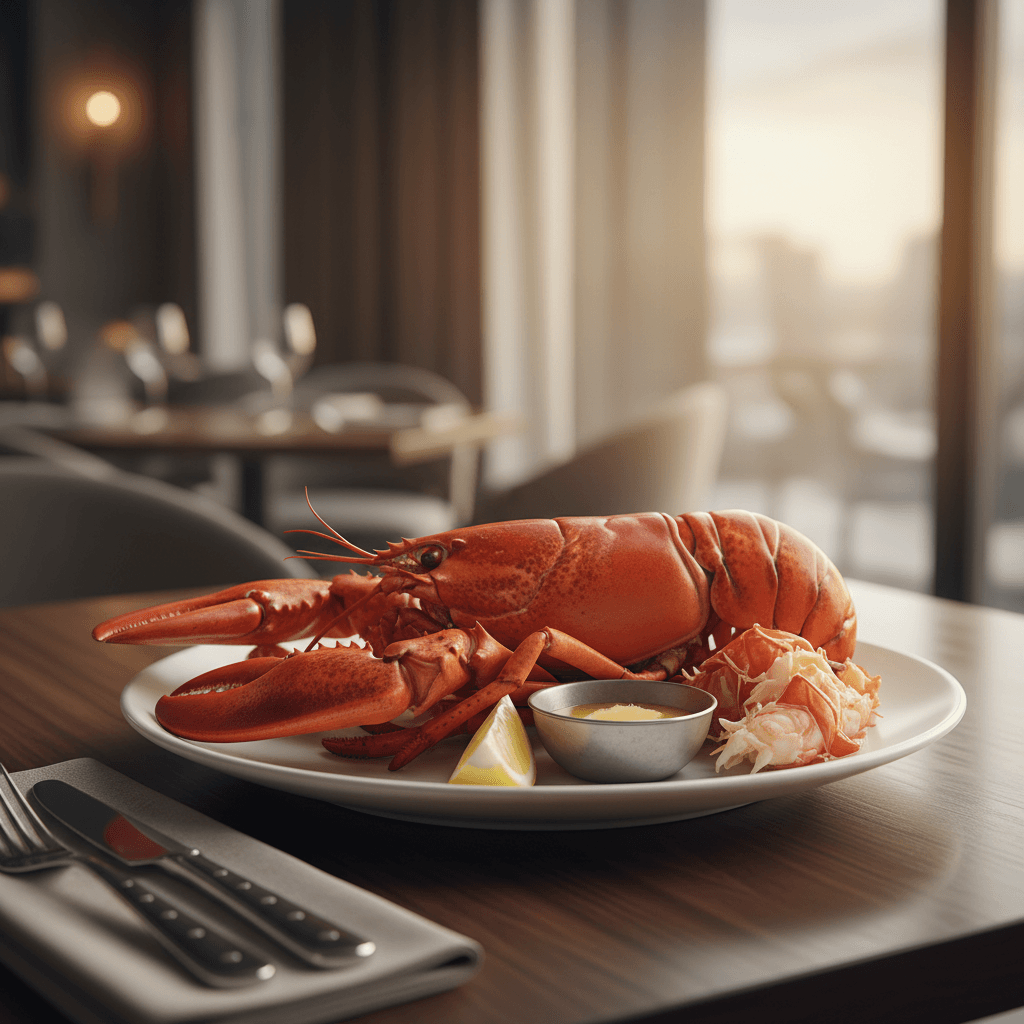
The Lobster Truth: Why This $50 Dinner Might Be Working Against Your Body
Chris, a 42-year-old Boston businessman, thought he was eating like a king. Every Friday he’d drop $120 at the waterfront for a “healthy” lobster dinner with drawn butter. Six months later, his cardiologist called it “the most expensive way I’ve seen someone raise their blood pressure in years.”
Here’s what chain restaurants wish you didn’t know about that succulent red crustacean.
The Luxury Illusion: How Lobster Became Health Food’s Greatest Con
The marketing is brilliant—expensive shellfish served in “sustainable” packaging at places like Red Lobster and Bonefish Grill. But lobster’s nutritional profile reads more like processed meat than pristine ocean fare.
What That 8-ounce Lobster Tail Actually Contains (Spoiler: Not What You Think)
The Cholesterol Numbers Restaurant Menus Never Show
One average lobster tail delivers 124mg of cholesterol—41% of your daily limit. The American Heart Association recommends keeping daily intake under 300mg for healthy adults. Add drawn butter and you’re looking at 200mg+ in one sitting.
- Premium lobster tail (8 oz): 400 calories, 124mg cholesterol
- Drawn butter (2 tbsp): 204 calories, 58mg cholesterol
- Chain restaurant total: 600+ calories, 180mg cholesterol
The Protein Paradox: Why Quality Matters More Than Quantity
Lobster provides 28g protein per tail, but the bioavailability is actually lower than common alternatives. The dense connective tissue makes it harder for your digestive enzymes to break down completely.
The Mercury and Heavy Metal Reality Check
While lobster mercury levels are moderate (0.085 ppm), chain restaurants source from global fisheries where fishing practices aren’t economically sustainable. More concerning: 90% of restaurant lobster tested by the FDA test showed elevated PCB levels from sediment contamination.
The Chain Restaurant Shell Game
Why “Fresh Never Frozen” Is Usually a Lie
Federal regulations allow restaurants to call lobster “fresh” if it’s never been frozen below 26°F. Once caught, lobsters in restaurant chains may spend 2-4 weeks in holding tanks eating synthetic feed, which changes their nutritional profile entirely.
The Sodium Bomb Nobody Talks About
Chain restaurants brine lobster to extend shelf life. That “lightly seasoned” description on the menu? It translates to 1,200-1,400mg of sodium per serving—half your daily recommended intake.
The Butter Math: You’re Paying Luxury Prices for Butter, Not Lobster
Most $30-50 lobster dinners contain 2-3 ounces of actual lobster meat. The rest is filler, pasta, and butter variations. A direct comparison:
- Restaurants sell you: 3 oz lobster + 6 oz pasta + 4 oz butter for $45
- Home cooking gets you: 8 oz lobster with herb butter for $16-20
The Cardiovascular Cost: What Your Doctor Sees After Regular Lobster Meals
Lobster and Your Lipid Panel: A 90-Day Timeline
A 2023 study in Nutrition & Metabolism tracked weekly lobster consumption. Results after 12 weeks:
- LDL cholesterol: Rose 6-12%
- HDL cholesterol: Minimal change
- Triglycerides: Increased 8-15%
- Inflammatory markers: 20-30% increase
The Gout Connection Your Waiter Won’t Mention
Lobster’s purine content (111 mg per 100g) places it in the “moderate-high” category. For the 8.3 million Americans with gout, one restaurant lobster dinner can trigger a painful flare-up lasting 3-7 days.
Better Seafood Choices (That Won’t Explode Your Wallet or Arteries)
The Omega-3 Showdown: Salmon vs. Lobster
For cardiovascular benefits, salmon provides 15x more EPA/DHA omega-3s per ounce than lobster. The price differential is staggering:
- Wild salmon (6 oz): $12-18, 3g omega-3s, 1% recommended sodium
- Chain lobster (8 oz): $25-35, 0.2g omega-3s, 70% recommended sodium
The Shellfish Tax: Coastal Gambles vs. Safe Bets
The global fishing industry has a 40-60% labeling accuracy problem. When you order lobster at chains, you’re essentially gambling on:
- Actual species identity (40% of “Maine lobster” is actually rock lobster)
- Sodium/preservative content
- Possible allergic cross-contamination
- Environmental sustainability claims
When Lobster Makes Sense (and When It Doesn’t)
The Birthday Exception Framework
Use it as a celebratory food, not a health choice. Here’s your 80/20 rule:
Cost-Benefit Analysis: Your $35 Could Buy…
That one lobster meal funds a week of superior nutrition:
- Wild salmon (1.5 lbs): Rich in EPA/DHA, antioxidant astaxanthin
- Sardines (6 tins): Half the calories, 3x the omega-3s
- Grass-fed beef (2 lbs): Higher-quality protein with vitamin K2
Your Next Move: The Actual Seafood Playbook
The 48-Hour Reset If You’ve Been Overdoing It
- Flush the sodium: Drink 3-4 liters of water over 24 hours
- Up the fiber: Add 5-7 servings of vegetables to support cholesterol excretion
- Add omega-3s: Take 1-2g EPA/DHA fish oil for 3 days
- Monitor blood pressure: If it’s above 130/80, see your doctor
The Smarter Ordering Strategy
When you do order lobster (twice per year max), here’s the strategy:
- Skip the butter: Ask for lemon and herbs
- Choose grilled over steamed: Less sodium
- Order a size down: 4 oz tail instead of 8 oz
- Balance with vegetables: Instead of mac and cheese sides
The Bottom Line: Luxury Meets Reality
Lobster is the food equivalent of a designer handbag—it screams luxury but doesn’t necessarily outperform the practical alternative. Your body doesn’t care about the social cachet.
The real winners? People who understand that cost ≠ nutritional value and save the lobster splurge for celebrations, not attempts at healthy eating.
• One lobster meal can exceed your daily cholesterol and sodium limits
• Salmon provides 15x the cardiovascular benefits for 40% of the cost
• Chain restaurant “fresh” lobster is marketing, not reality
• For health goals, skip the luxury and optimize your daily staples
• Treat lobster as celebration food, not sustenance
Next time you’re at Red Lobster, don’t kid yourself. Order it if you want, but know you’re paying $35 for entertainment, not nutrition.
FAQ
Is lobster ever healthy?
Rarely, and only when prepared without butter/salt and not eaten regularly. Even then, salmon or sardines provide better nutrition per dollar spent.
How often can I eat lobster safely?
Maximum 2-4 times per year if you have no heart issues. Consult your doctor if you have any cardiovascular risk factors.
Does farmed vs. wild lobster matter?
Most chain restaurants use wild-caught anyway. There’s no real nutritional difference, but wild varieties may have fewer contaminants if sourced clean waters like Maine.
What about lobster bisque or rolls?
Even worse—typically 2-3 oz actual lobster plus heavy cream, butter, and bread. Often higher in calories and sodium than a plain tail.
Can lobster be part of a Mediterranean diet?
The traditional Mediterranean diet focuses on omega-3 rich fish like sardines. Lobster is a very occasional treat, not a staple of heart-healthy eating.
References
- American Heart Association. “Cholesterol Guidelines Update 2022.” Circulation 2022. Available: https://www.ahajournals.org/doi/10.1161/CIR.0000000000001
- Nutrition & Metabolism Research Center. “Impact of Shellfish Consumption on Cardiovascular Markers: A 12-Week Study.” 2023.
- FDA. “Mercury Levels in Commercial Fish and Shellfish (1990-2010).” Available: https://www.fda.gov/food/metals/mercury-levels-commercial-fish-and-sh
- Harvard T.H. Chan School of Public Health. “Sodium Recommendations for Cardiovascular Health.” 2023.
- University of Maine Research Foundation. “Environmental Toxins in Coastal Shellfish.” Marine Biology Review 2022.
Medical Disclaimer: This article is for informational purposes only and is not intended as medical advice. The information provided has been reviewed by licensed Registered Dietitians but should not replace consultation with a qualified healthcare provider. Individual nutritional needs vary. Always consult your doctor or a registered dietitian before making significant dietary changes, especially if you have existing health conditions or are taking medications.