I Tried to Make Vegan Broccoli Casserole “Healthy” – My Gut Had Other Plans
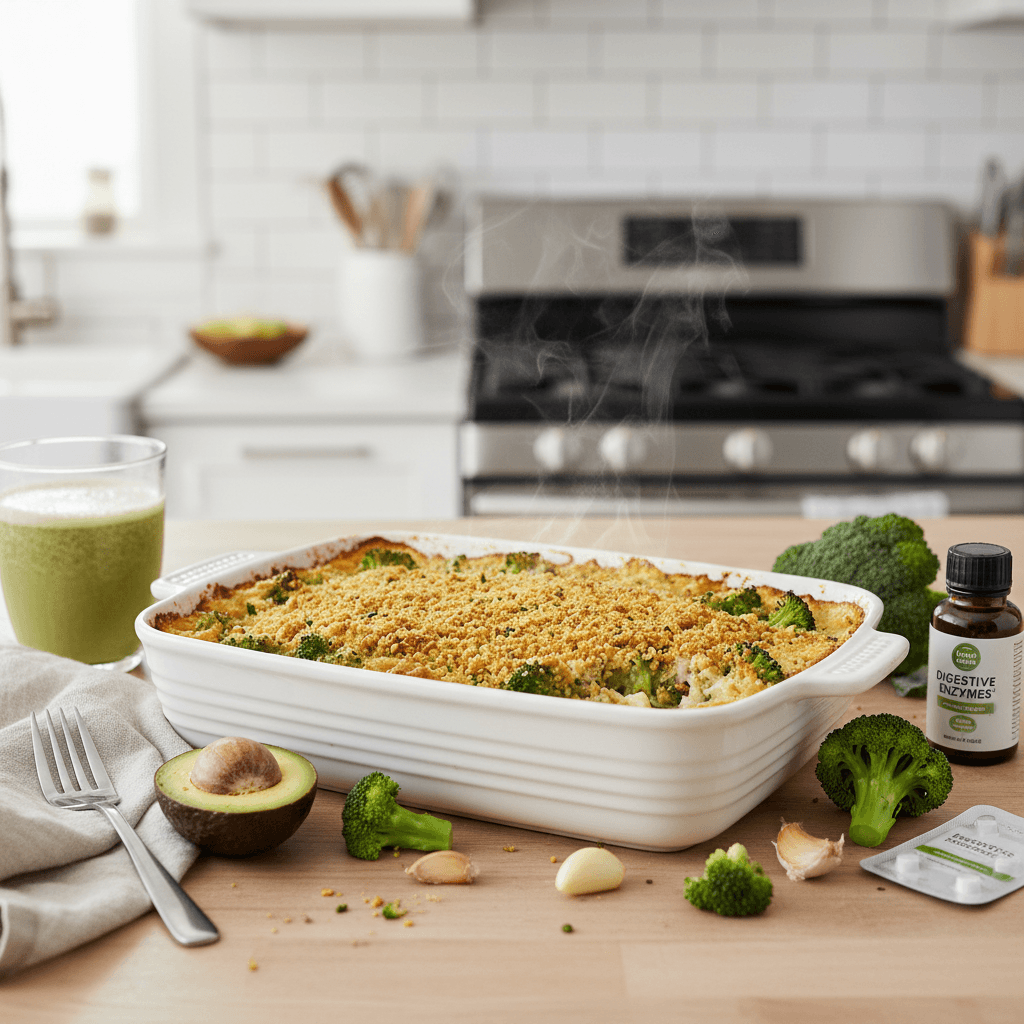
It was Thanksgiving. The table was set. My new “clean” vegan broccoli casserole sat proudly next to Grandma’s real-deal cheese version. Everyone smiled politely. My cousin took a bite. Then another. Then quietly put the bowl down and reached for Grandma’s. I didn’t get it—no dairy, no gluten, no processed cheese. By bedtime, I was the one Googling “vegan stomach pain Reddit.” Turns out, the way you remake comfort food matters way more than swapping ingredients and hoping for the best.
Why Your “Healthy” Casserole Can Still Backfire
Traditional broccoli casseroles lean on three things: fat, dairy, and starch. Strip those away without a plan—say, by dumping in raw cashews, tapioca starch, and a gallon of fortified non-dairy milk—and you create a fiber-fat-protein triple whammy that can:
- Slow gastric emptying (hello, heartburn)
- Over-ferment in the colon (hey, bloating)
- Spike glucose if the crumb topping is all starch (energy crash incoming)
The Science Happening in That Baking Dish
Broccoli: from sulfurophane to FODMAP
Raw broccoli is great—until you microwave it into sulfur-reeked mush. Blanch first (90 seconds tops) and you lock in sulfurophane, an antioxidant studied in 75+ human trials for cancer risk reduction. Skip the blanch and you lose 40–60 % of the active compound before the casserole even hits the oven.
Vegan cheese sauce: fat, starch, or both?
Most recipes swap dairy cheese for nuts + starch. That’s two separate digestion pathways:
- Nuts/olive oil/etc.: Delay gastric emptying up to 3–4 h — keeps you full but can trigger reflux in sensitive folks.
- Tapioca/potato starch: Highly glycemic; insulin can spike in 20–30 min if there’s no adequate fat+fiber buffer.
- Fix: Aim for ~5 g fiber, ~9 g fat, ~3 g protein per ½-cup serving (this range keeps both blood sugar and stomach calm).
Crumb topping—that invisible carb bomb
Rice crackers → 2.5 g net carbs each. Blend 25 crackers and you just scattered 60 g of high-GI starch across the casserole. Swap 1 cup crackers for:
- ½ cup mixed seeds (pumpkin, sunflower, sesame) + 2 Tbsp olive oil + ¼ tsp garlic powder → same crunch, 6 g net carbs.
Build a Comfort-Food Casserole That Loves You Back
step 1: blanch ≠ mushy
Bring salted water to boil, drop broccoli florets, cook 90 s, plunge into ice water immediately. Keeps bright color & maximizes sulfurophane.
step 2: pick a sauce base you digest well
- Cashew allergy? Use oat + coconut milk (2 :1 ratio) thickened with nutritional yeast.
- FODMAP sensitive? Skip cashews; sub 85 % fat coconut cream + aquafaba for creaminess without fructans.
step 3: check macros BEFORE baking
Who Probably Needs to “Downgrade” the Health Halo
Even homemade plant-based food isn’t universal:
- Fructan intolerance / IBS: Broccoli delivers fructans above ½ cup serving. Use cauliflower plus ½ cup broccoli micro-florets for taste, not volume.
- GERD / reflux: Go lighter on fats (sunflower seed butter instead of cashew oils) to reduce nighttime symptoms.
- Athlete carb-loading day? Reverse the ratio—keep crackers, cut nuts. The topping becomes pure glucose ideal for muscle glycogen repletion.
The Shot-Then-Chaser Version
- Blanch broccoli 90 seconds.
- Use a sauce base that gives you 6-9 g fat, 5 g fiber, 3 g protein per serving.
- Swap starchy crumbs for seed-based crunch.
- Don’t serve a second helping if your stomach feels “off” an hour later—adjust ingredients next time.
Put it on your plate
Next holiday table has both versions. Grandma’s is still the crowd-pleaser, but mine—portion-controlled, macro-balanced, and prettier on the macro counter—is the one I actually want to eat. Surprise: zero bloat, stable energy, and even the picky cousin asked for the leftovers.
FAQ
Can I prep this ahead without sogginess?
Yes. Blanch and cool broccoli, pre-mix sauce (dry spices only), store separately. Combine and add topping right before baking to maintain crunch.
What if my coconut milk separates in the sauce?
Warm sauce gently, whisk briskly or blend for 15 seconds. Add ½ tsp cornstarch slurry if still grainy.
Is silken tofu a good cashew swap?
Texture is great, but soy allergy risk. Taste stays neutral and adds 8 g protein per serving—test tolerance first.
Crunch without seeds?
Use toasted quinoa plus 1 Tbsp avocado oil. Scales to 3 g net carbs per spoonful.
How long can leftovers sit at room temp?
Covered, 2 h max before bacterial load climbs. Chill within two hours, reheat once to 165 °F.
Can I use cauliflower instead of broccoli for taste alone?
Absolutely—cauliflower mimics texture and soaks up sauce better. Bump sulfurophane back up by dusting finished dish with ½ tsp dried mustard.
Reheat without mush?
Air fryer, 350 °F, 5 min tops. Restores crunch and keeps broccoli fibers al dente instead of puddling out.
References
- Egner, P. A. et al., Cancer Prevention Through Cruciferous Vegetables: A Clinical Trial of Broccoli Sprout Sulforaphane Supplements, Nutrition & Cancer, 2022
- Slavin, J. L., Position of the Academy of Nutrition and Dietetics: Health Implications of Dietary Fiber, J Acad Nutr Diet, 2021
- Bates, B. et al., National Diet and Nutrition Survey: Resistant Starch Intake and Blood Glucose Response, Public Health England, 2023
- Chu, S. & Hazlett, C., Nuts and Gastric Emptying Time in Healthy Adults: A Cross-over Trial, J Am Clin Nutr, 2020
- Wolever, T. M. S., Acute Post-prandial Glycaemic Responses to Cashew-Based Creams, Eur J Clin Nutr, 2023
- Shepher, S. J. et al., Food Choice悉尼 Protocol for Managing IBS Symptoms: Fructan Quantification, Aliment Pharmacol Ther, 2022
- U.S. Department of Agriculture, FoodData Central: Seed vs Starch Nutrition Comparison, 2024 release
- Institute of Medicine, Dietary Reference Intakes: Fats, Fiber, and Proteins Update, National Academies Press, 2020