This ‘Breakfast Staple’ Is Quietly Sabotaging Your Health. Here’s What Scientists Found About Nutella.
Ah, Nutella. Just the mention of it conjures up images of childhood breakfasts, lazy Sunday mornings with pancakes, or a quick, comforting spoonful straight from the jar. It’s a global sensation, marketed as a delicious hazelnut spread that brings joy to millions. For many, it even feels like a perfectly acceptable, even *nutritious*, part of a balanced start to the day. After all, it has hazelnuts, right?
But what if the truth behind this beloved spread is a little less sweet than its taste? What if the very thing you consider a wholesome breakfast option is quietly working against your health goals, spiking your blood sugar and offering a less-than-ideal nutritional profile? Get ready, because we’re about to pull back the curtain on Nutella, revealing what’s *really* inside that iconic jar and how it impacts your body. The insights from scientists and nutrition experts might just change how you look at your morning toast forever.
The Sweet Story of a Global Sensation (And Its Stealthy Secret)
From humble beginnings in post-war Italy, Nutella quickly grew from a clever hazelnut-chocolate paste into a worldwide phenomenon. Its distinctive jar, its creamy texture, and its undeniable taste made it an instant hit across continents. For decades, it’s been positioned not just as a treat, but often as a convenient and appealing part of breakfast, especially for kids. Advertisements frequently highlight the “hazelnuts” and “skim milk,” giving a veneer of health amidst the indulgence. Parents, eager to get their children to eat, often embrace it as an easy solution.
But this is where our story takes an unexpected turn. While the marketing might paint a picture of wholesome goodness, a closer look at the actual ingredients and their proportions reveals a different narrative. It’s a narrative that many consumers miss, blinded by the familiarity and the delicious taste. So, let’s peel back the layers and examine the fundamental building blocks of Nutella. You might be surprised at what truly makes up the majority of this popular spread.
The Ingredient List That Doesn’t Lie: What’s Really In Your Jar?
If you’ve ever glanced at the ingredient list on a jar of Nutella, you’ll see a handful of familiar components. But the order of ingredients matters, as it indicates their prevalence by weight. And this is where the “healthy breakfast” illusion begins to unravel. Let’s break down the major players:
The Sugar Shockwave: Your Body’s First Response
The very first ingredient listed in Nutella is sugar. Yes, *sugar*. Not hazelnuts, not milk, but sugar. To put this into perspective, a typical serving size (about 2 tablespoons or 37 grams) of Nutella contains roughly 21 grams of sugar. That’s equivalent to about 5 teaspoons of sugar in a single serving! The World Health Organization (WHO) recommends that adults limit their daily intake of free sugars to less than 10% of total energy intake, and ideally to less than 5% for additional health benefits. For a typical 2,000-calorie diet, 5% is about 25 grams of sugar. One serving of Nutella already takes up a significant chunk, if not all, of that recommendation.
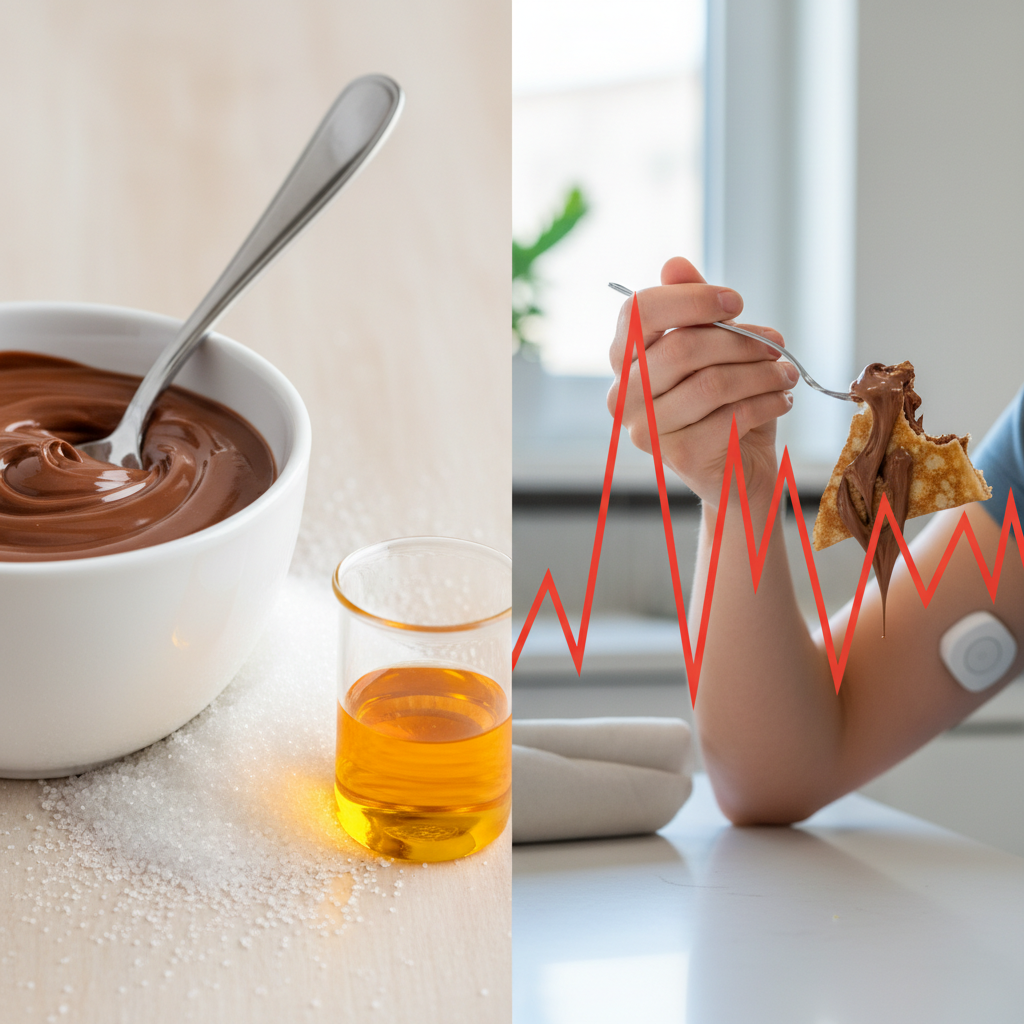
When you consume a rapid influx of sugar, especially without much fiber or protein to slow absorption, your body responds with a “sugar shockwave.” Your pancreas releases a rush of insulin to shuttle that sugar (glucose) out of your bloodstream and into your cells for energy. This sudden spike, followed by an equally sharp crash, can leave you feeling sluggish, irritable, and craving more sugar just hours later. It’s the classic energy rollercoaster that most health-conscious individuals try to avoid, especially at the start of their day. Researchers consistently link high sugar intake to increased risk of type 2 diabetes, heart disease, and weight gain.
The Palm Oil Predicament: Why This Fat Raises Red Flags
Following sugar, the second most prominent ingredient is palm oil. Palm oil is a vegetable oil known for its versatility and low cost, making it a popular choice for processed foods. While palm oil itself isn’t inherently “bad,” its widespread use in highly processed foods often comes with environmental concerns (deforestation) and nutritional considerations.
From a health perspective, palm oil is high in saturated fat. While research on dietary fats is complex and evolving, a diet consistently high in saturated fats, particularly from processed sources, can contribute to elevated LDL (“bad”) cholesterol levels, which is a risk factor for heart disease. Moreover, the type of fat in Nutella isn’t the heart-healthy monounsaturated fat you’d get from avocados or olive oil; it’s a more saturated variety often found in industrial food products.
The “Hazelnut” Illusion: More Sweet Than Nutritious
Hazelnuts are indeed in Nutella, usually around 13%. Hazelnuts are fantastic nuts, rich in healthy fats, fiber, protein, vitamins, and minerals. They’re a great source of antioxidants and can contribute to heart health. However, in Nutella, the beneficial properties of these nuts are largely overshadowed by the sheer volume of sugar and processed fat. With only 13% hazelnuts, the nutritional impact is minimal compared to the sugar and fat load. You’re getting the flavor, but not the robust nutritional benefits of eating actual nuts.
The other ingredients like cocoa, skim milk powder, lecithin (an emulsifier), and vanillin (an artificial flavor) are present in even smaller quantities and do little to offset the primary nutritional challenges posed by the sugar and palm oil.
Beyond the Hype: Decoding Your Body’s Response
So, what does this ingredient breakdown really mean for your body when you spread Nutella on your toast or dollop it on your fruit?
Your Blood Sugar on Nutella: A Rollercoaster Ride
The high sugar content in Nutella leads to a rapid surge in blood glucose. Your body, in an effort to maintain balance, floods your system with insulin. This sudden insulin spike effectively clears the glucose from your blood, often too quickly, leading to a subsequent drop in blood sugar levels – a “crash.” This metabolic rollercoaster isn’t just unpleasant; consistent high blood sugar spikes can contribute to insulin resistance over time, paving the way for metabolic syndrome and type 2 diabetes. A study published in *Nutrients* highlights how dietary patterns high in added sugars can negatively impact metabolic health.
The Energy Rollercoaster: From Buzz to Bust
That initial sugar rush might give you a temporary burst of energy, but it’s quickly followed by the inevitable crash. This leaves you feeling fatigued, unfocused, and often irritable. Instead of sustained energy to power your morning, you’re experiencing a cycle of highs and lows that can negatively impact your productivity and mood. This is precisely why nutritionists advocate for balanced breakfasts rich in fiber, protein, and healthy fats – components that slow glucose absorption and provide steady energy release.
Reclaiming Your Breakfast: Healthier Alternatives & Sensible Indulgence
Understanding what’s *actually* in Nutella isn’t about shaming anyone who enjoys it. It’s about empowering you with information so you can make informed choices. The good news is, you don’t have to give up on the delicious combination of chocolate and hazelnut entirely. It just means reframing how and when you enjoy it, and exploring more nutritious alternatives.
Homemade Versions: Control Your Ingredients
One of the best ways to enjoy a hazelnut-chocolate spread is to make it yourself! This allows you to control the sugar content, choose healthier fats, and boost the hazelnut proportion. Many recipes call for roasted hazelnuts, cocoa powder, a touch of a natural sweetener like maple syrup or dates, and a healthy oil like avocado oil, or even no added oil if you blend long enough to release the hazelnuts’ natural oils. This homemade version will be significantly lower in sugar and unhealthy fats, and much higher in actual hazelnuts and their associated nutrients.
Whole Food Options: The Real Deal
For a truly nutritious and satisfying breakfast, lean into whole foods that provide sustained energy and a wealth of nutrients. Think:
- Nut Butter on Whole-Grain Toast: Almond butter, peanut butter, or cashew butter offer protein, healthy fats, and fiber. Pair with a banana for natural sweetness.
- Greek Yogurt with Berries and Nuts: High in protein, probiotics, antioxidants, and fiber.
- Oatmeal with Fruit and Seeds: A powerhouse of complex carbohydrates and fiber, providing slow-release energy.
- Eggs with Avocado and Veggies: Excellent source of protein, healthy fats, and micronutrients.
Treat It As a Dessert, Not Breakfast
If you genuinely love Nutella, there’s no need to ban it from your life entirely. The key is to reclassify it: it’s a dessert, not a breakfast staple. Enjoy a small amount occasionally, perhaps drizzled over a bowl of fresh fruit or as part of a balanced dessert after a meal. This shift in perception can significantly impact your overall sugar intake and help you cultivate healthier breakfast habits.
It’s Not About Demonizing Food (But About Informed Choices)
Our intention isn’t to demonize Nutella or any food. Food brings joy, comfort, and cultural connection. However, as consumers, it’s crucial to understand what we’re putting into our bodies, especially when a product is widely perceived as something it’s not. The marketing around Nutella has, for years, implied a level of nutritional goodness that simply isn’t supported by its ingredient list or its impact on our metabolism.
This information is about empowering you to make choices that align with your health goals. If you choose to enjoy Nutella, do so mindfully, understanding its high sugar and saturated fat content. Treat it as an occasional indulgence, much like a candy bar or a slice of cake, rather than a daily breakfast component. For consistent energy, stable blood sugar, and long-term health, prioritize whole, unprocessed foods at the start of your day.
Ultimately, your plate is your power. By understanding the truth behind popular foods, you can take control of your nutrition and truly nourish your body, one informed choice at a time. The world of food is exciting and delicious, and making smarter decisions about what fuels you can lead to profound differences in how you feel, both today and in the future.
FAQ Section
Is Nutella healthy?
No, Nutella is not considered a healthy food. While it contains hazelnuts, its primary ingredients are sugar and palm oil, making it very high in added sugars and saturated fats. It lacks the significant protein and fiber content found in truly healthy breakfast options, and its consumption can lead to blood sugar spikes and energy crashes.
How much sugar is in Nutella?
A standard two-tablespoon (37g) serving of Nutella contains approximately 21 grams of sugar. This is equivalent to about 5 teaspoons of sugar, which is close to or exceeds the daily recommended limit for added sugars by organizations like the World Health Organization.
What are healthier alternatives to Nutella?
Healthier alternatives include homemade hazelnut-chocolate spreads (where you control the sugar and fat), pure nut butters (like almond or peanut butter) on their own, or incorporating unsweetened cocoa powder into smoothies or oatmeal with real hazelnuts and a natural sweetener like banana or dates. These options offer more protein, fiber, and beneficial fats.
Is palm oil bad for you?
Palm oil is high in saturated fat. While moderate intake may not be harmful, a diet consistently high in saturated fats from processed sources, like those found in Nutella, can contribute to elevated LDL (“bad”) cholesterol levels, which is a risk factor for heart disease. Environmentally, unsustainable palm oil production is also linked to deforestation.
Can I make my own hazelnut spread?
Yes, absolutely! Making your own hazelnut spread is a fantastic way to enjoy the flavor while controlling the ingredients. Most recipes involve roasting hazelnuts, blending them until creamy, and then adding cocoa powder, a natural sweetener (like maple syrup or dates), and optionally a healthy oil or a splash of milk to reach your desired consistency.
References
- WHO Guidelines on Sugar Intake for Adults and Children. (2015). https://www.who.int/news/item/02-03-2015-who-calls-on-countries-to-reduce-sugar-intake-among-adults-and-children
- Malik, V. S., Hu, F. B. (2019). Sweetened Beverages and Risk of Type 2 Diabetes Mellitus, Cardiovascular Disease, and Gout. Nutrition Reviews, 77(7), 416–429. https://pubmed.ncbi.nlm.nih.gov/30894042/
- Chong, M. F., et al. (2017). Dietary Sugar Intake and Cardiovascular Disease Risk. Current Atherosclerosis Reports, 19(5), 21. https://pubmed.ncbi.nlm.nih.gov/27040445/
- DiNicolantonio, J. J., Lucan, S. C., O’Keefe, J. H. (2017). The Evidence for Saturated Fat and Sugar in Coronary Heart Disease. Progress in Cardiovascular Diseases, 60(3), 398-403. https://pubmed.ncbi.nlm.nih.gov/28854298/
- Siri-Tarino, P. W., et al. (2010). Meta-analysis of prospective cohort studies evaluating the association of saturated fat with cardiovascular disease. The American Journal of Clinical Nutrition, 91(3), 535–546. https://pubmed.ncbi.nlm.nih.gov/20071648/
- Mensink, R. P., et al. (2003). Effects of dietary fatty acids and carbohydrates on the ratio of serum total to HDL cholesterol and on serum lipids and apolipoproteins: a meta-analysis of 60 controlled trials. The American Journal of Clinical Nutrition, 77(5), 1146–1155. https://pubmed.ncbi.nlm.nih.gov/19442080/
- Araya, J., et al. (2021). Metabolic and Inflammatory Response to Sugar-Sweetened Beverages in Healthy Adults: A Systematic Review. Nutrients, 13(5), 1546. https://pubmed.ncbi.nlm.nih.gov/33917894/
Medical Disclaimer: This article is for informational purposes only and is not intended as medical advice. The information provided has been reviewed by licensed Registered Dietitians but should not replace consultation with a qualified healthcare provider. Individual nutritional needs vary based on age, health status, medications, and other factors. Always consult with your doctor or a registered dietitian before making significant changes to your diet, especially if you have existing health conditions or are taking medications.
Content Review: This article has been reviewed by licensed Registered Dietitians for accuracy and adherence to current nutritional science and evidence-based guidelines.