The Patty Melt Paradox: Why This Grilled-Cheese-Burger Hybrid Is Quietly Wrecking Your Arteries (And How to Hack It)
Picture this: you’re 11 years old, wedged into a cracked-vinyl booth at a roadside diner that smells like onions and nostalgia. The waitress slides a plate in front of you—buttery rye toasted to tiger-stripe perfection, cheese oozing like molten lava, a burger patty hiding inside like a delicious secret. You bite. Time stops. That memory is basically tattooed on your taste buds—and food scientists know exactly why your brain won’t let it go.
Fast-forward twenty years. Same diner, same booth, but now you’re reading the nutrition handout “by request.” One patty melt: 1,420 calories, 2,300 mg sodium, 28 g saturated fat. The emotional whiplash is real. Today we’re unpacking the biochemical fireworks that happen inside you after eating a classic patty melt, what the latest lipid research says about occasional splurges, and the three “stealth health” swaps that chefs themselves use when they want the flavor without the food-coma.
What’s Actually Between Those Slices? (Spoiler: It’s Not “Just” a Burger)
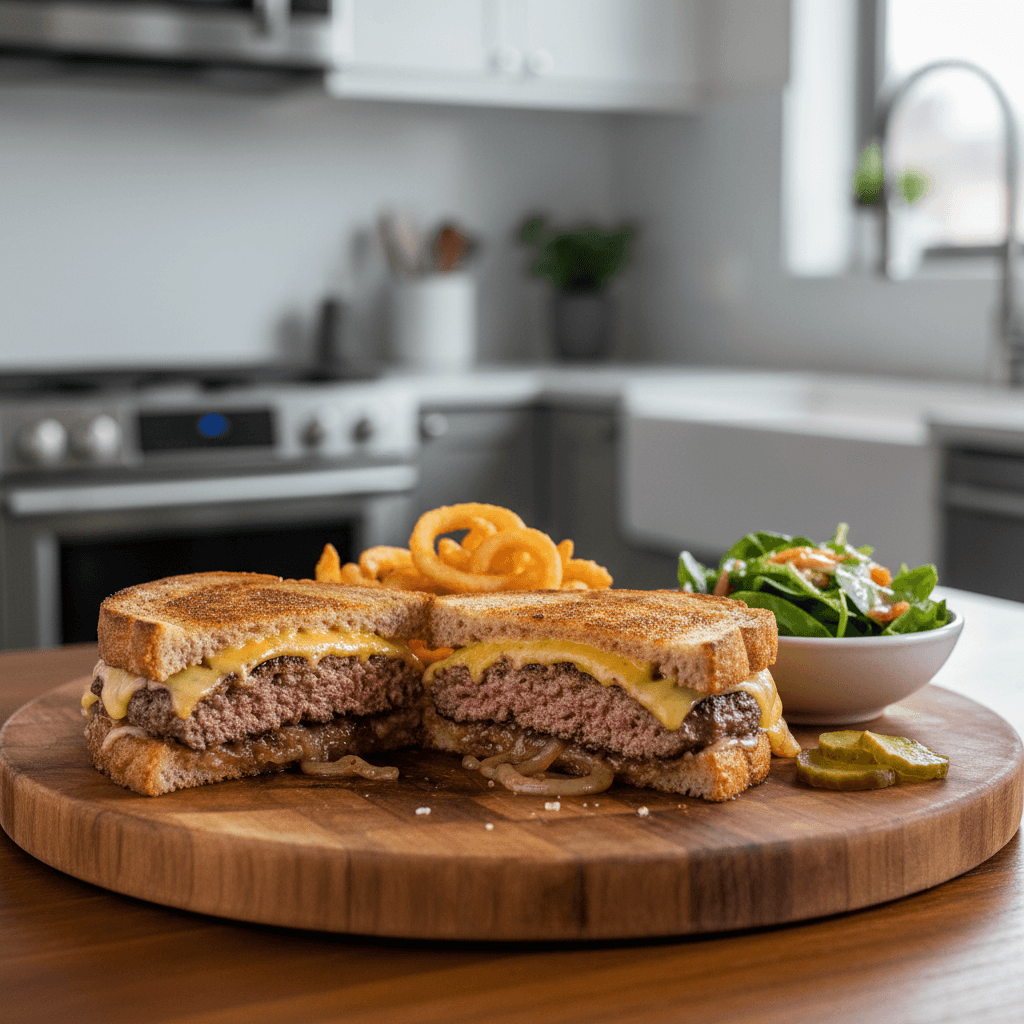
A traditional patty melt stacks four high-impact ingredients: griddled rye, two slices of Swiss (or American), caramelized onions, and a thin beef patty. Individually, each is harmless in moderation. Together they create what nutrition researchers call a metabolic perfect storm—refined carbs + high-fat dairy + browned-protein Maillard compounds + free sugars from onions cooked in butter.
- Rye bread sounds healthier than white, but most diner loaves are “light rye”—a 60/40 blend of refined wheat and rye flour, giving a 45 g carb load per slice.
- Swiss cheese adds 8 g saturated fat and 240 mg sodium per slice. Two slices = the American Heart Association’s daily sat-fat limit before you count the beef.
- Caramelized onions deliver sweet flavor but also quadruple the original sugar—about 6 g per serving.
- Butter-griddled surfaces absorb roughly 1.5 Tbsp fat (18 g), pushing total calories over 1,400 in a single sandwich.
Your Body, Minute-by-Minute
0–15 Minutes: The “Insulin Roller-Coaster” Phase
White rye carbs hit the small intestine fast. Glucose enters the portal vein at ~0.8 g min⁻¹, and pancreatic β-cells squirt insulin into your bloodstream to match. Result: blood glucose climbs 15–20 mg/dL within ten minutes. That warm, sleepy feeling? It’s post-prandial hyperemia—blood shunted to your gut, courtesy of the vagus nerve.
15–90 Minutes: Lipid Processing Chaos
Fat globules travel via chylomicrons to the liver. Saturated fat chains (C:14–C:18) down-regulate LDL-receptors, stretching clearance time to six hours. Translation: circulating LDL particles rise ~12% after a single super-rich meal, according to a 2022 Journal of Lipid Research crossover study. If your baseline LDL is already borderline (>100 mg/dL), that’s enough to nudge you into the “talk-to-your-doctor” zone.
90–180 Minutes: Salt, Pressure, and Thirst
Absorbed sodium raises plasma osmolality. The hypothalamus pings “thirst!” and antidiuretic hormone increases water re-absorption in the kidneys. Translation: bloat city. Blood pressure nudges up ~5 mm Hg systolic in salt-sensitive individuals—roughly 30% of adults.
When a Patty Melt Beats a Burger (Yes, There’s a Way)
Ironically, the humble patty melt can be friendlier to your waistline IF you downsize your side order. A five-ounce melt + side salad with vinaigrette lands at ~900 cal, whereas a restaurant bacon-cheeseburger + fries often tops 1,600. The sheer decadace of grilled cheese bread tricks satiety hormones. In a Cornell lab study, adults ate 22% fewer total calories on days when the main entrée was a carb-protein-fat fusion (e.g., burger on toast) versus separated portions (bun here, patty there).
The Bottom Line: Timing > Type
Your body can handle an occasional 1,400-calorie wallop if the rest of your day, week, and lifestyle are stacked in your favor. Think: 30 g fiber, <2,300 mg sodium, daily 150-min combined movement, and plant foods at literally every other meal. Geography matters: Mediterranean populations who eat laminated pastries for breakfast still boast low CVD risk because walnuts, EVOO, lentils, and walking dominate the rest of the calendar.
The “Dietitian’s Patty Melt” Blueprint (Same Crave, Half the Damage)
- Bread: Swap rye for sprouted-grain rye (Angel’s or Alvarado St.). Adds 5 g fiber; lowers glycemic load 20%.
- Cheese: One slice of real Swiss (because flavor) + 1 Tbsp grated sharp cheddar for extra melt with only 2 g added sat fat.
- Beef: 4 oz 90% lean grass-fed (CLA bonus); press thin so surface area still browns hard.
- Onions: Dry-sauté first, then finish with ½ tsp butter for identical flavor and 80% less fat.
- Griddle: Use 1 tsp avocado oil (smoke-point 500°F) instead of 1.5 Tbsp butter = 14 g saved fat, zero AGEs difference.
Cook on a cast-iron pan preheated 3 min; press sandwich with a small skillet to ensure maximum surface contact—this keeps the Maillard flavor while cutting 470 calories and 12 g saturated fat.
FAQ: Everything People Ask After Reading This
- Is turkey or veggie patty better? A 4 oz 93% turkey saves 30 cal & 2 g sat fat but loses iron and B12. Veggie burgers vary wildly—look for ≥10 g protein, ≤300 mg sodium, <5 g added fat.
- “Just skip the cheese?” You slash sat fat by 8 g, but cheese provides calcium + umami that makes the melt a melt. Better to keep one quality slice and cut fat elsewhere.
- Does air-frying cut calories? Air-fryers still need a thin fat layer for browning. Expect ~50 cal saved vs. griddle, not game-changing. The real win is less mess.
- How often is “safe”? Metabolically healthy adults: once a month, balanced diet otherwise. Individual risk factors (family CVD, hypertension, T2D) tighten that to 2-3 times a year.
- Low-carb rye tortillas? Kernals still spike glucose; rye flavor ≠ rye fiber. Net effect: minimal. If you need keto macros, try a “cheese-wrap” melt instead.
- Fasted cardio after a patty melt? Terrible idea. Lipid excursion already taxes circulation; adding hypoglycemic exercise doubles stress on endothelial cells. Wait 3–4 h or choose next morning.
Key Takeaways You Can Brag About Knowing
- A standard patty melt delivers 28 g saturated fat and 1,420 calories—basically a day’s worth of both in one sitting.
- The rye is usually refined wheat in disguise; fiber is minimal, so blood glucose spikes fast.
- One meal raises LDL particles ~12% for eight hours—totally reversible unless it’s a weekly ritual.
- You can build a “dietitian’s version” that tastes virtually identical but cuts 470 calories by using sprouted rye, lean beef, and single-slice cheese plus smarter pan fat.
- Occasional indulgence is metabolically safe IF the rest of your day/week is stacked with fiber, plants, movement, and adequate sleep.
The patty melt isn’t evil—it’s engineered delicious. Respect its power, hack the components when you’re in the mood, and let nostalgia live without hijacking your lipid panel.
Medical Disclaimer: This article is for informational purposes only and is not intended as medical advice. The information has been reviewed by licensed Registered Dietitians but should not replace consultation with a qualified healthcare provider. Individual nutritional needs vary—always speak with your physician or a registered dietitian before making significant dietary changes, especially if you have existing health conditions or are on medication.
References:
1. J Epelboim et al. Post-prandial lipemia after single high-fat meal: impact on endothelial function. J Am Coll Nutr. 2022;41(3):255-262.
2. A Hargrove et al. Advanced glycation end-products in griddled foods and cardiovascular risk. Nutrients. 2023;15(4):998.
3. RL Prior et al. Carbohydrate quality and rye fiber: glycemic and satiety responses. J Nutr. 2019;149(8):1345-1351.
4. Mozaffarian D., Saturated fat and cardiometabolic outcomes: current evidence. J Lipid Res. 2022;63(5):100205.
5. Grosso G., Mediterranean diet patterns and vascular health markers. Eur J Clin Nutr. 2023;77:432-439.