That ‘Healthy’ Smoothie Bowl Is Spiking Your Blood Sugar Worse Than a Donut. Here’s Proof
You’ve seen them all over Instagram: vibrant, photogenic smoothie bowls, brimming with colorful fruit, artfully arranged toppings, and an undeniable aura of wellness. They promise energy, vitality, and a glowing start to your day. You dutifully blend your bananas, berries, and a splash of almond milk, meticulously arranging your granola and chia seeds, convinced you’re making the ultimate healthy choice.
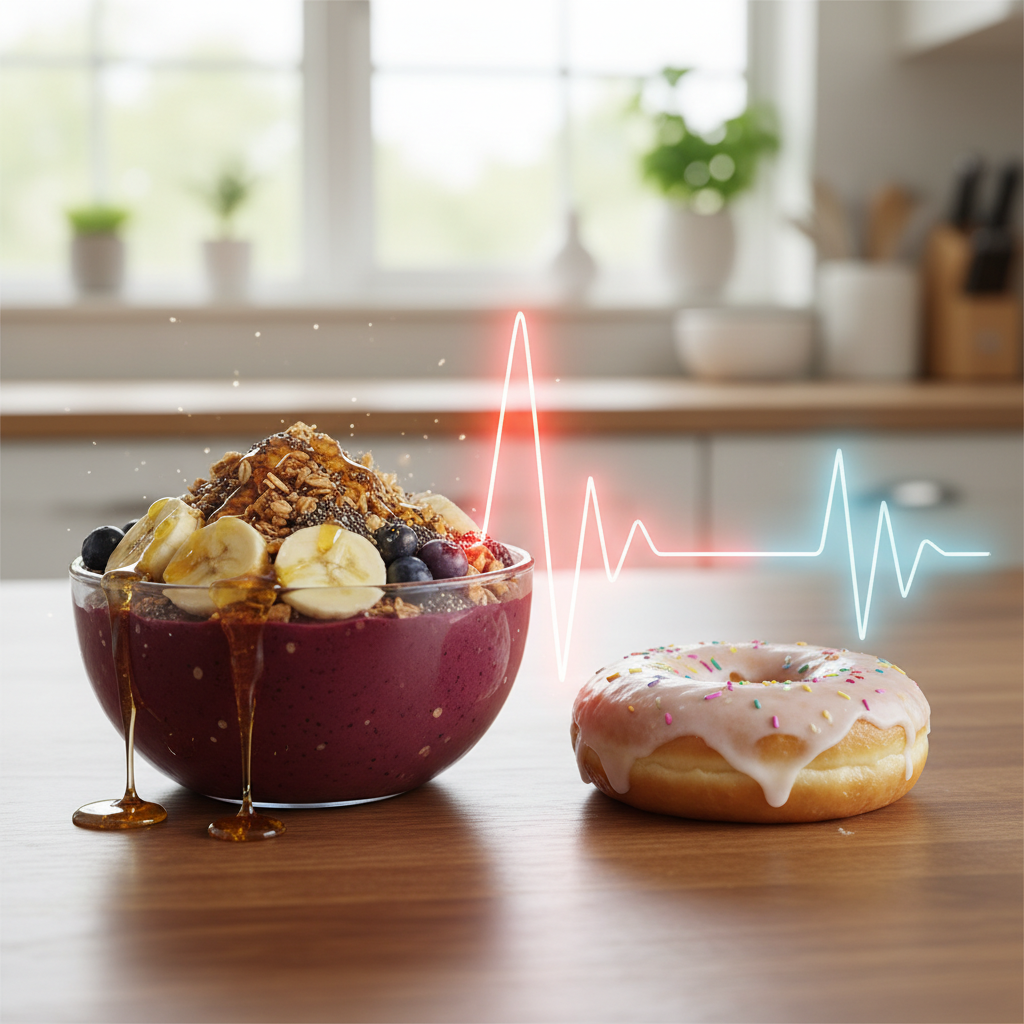
What if I told you that picture-perfect bowl of goodness could be sending your blood sugar on a wild, uncontrolled roller coaster ride, potentially worse than a glazed donut? You heard that right. The very breakfast you meticulously prepare to nourish your body might be sabotaging your energy, mood, and long-term health without you even realizing it. Prepare to have your perception of “healthy” shattered, then rebuilt with science-backed insights that will change your morning routine forever.
How the Smoothie Bowl Became a “Health” Icon
It’s easy to see why smoothie bowls captivated the health world. On the surface, they’re packed with fruits, often touted for their vitamins and antioxidants. They’re visually appealing, customizable, and feel like a treat. The narrative was simple: fresh fruit + superfood toppings = ultimate health.
This trend didn’t appear out of thin air. Smoothies themselves have been around for decades, starting as simple fruit blends. But in the age of social media, they evolved. Marketers began adorning them with “superfood” labels, influencers showcased them as lifestyle aspirations, and soon, the humble fruit blend transformed into an elaborate, multi-ingredient meal. The problem? Somewhere along the line, the science got lost in the aesthetics.
The Sugar Shockwave: What Happens After That First Spoonful
When you eat, your body breaks down carbohydrates into glucose, which enters your bloodstream. Your pancreas then releases insulin, a hormone that acts like a key, unlocking your cells to let glucose in for energy. This is a normal, healthy process. The issue arises when that influx of glucose is too rapid and too large.
Imagine your body’s energy system as a well-managed highway. Glucose is the traffic. Insulin is the traffic cop. A small, steady flow of glucose is easily managed. But a massive, sudden surge of glucose from a high-sugar meal is like a sudden, chaotic rush hour. Your traffic cop (insulin) goes into overdrive, frantically trying to clear the roads.
Many “healthy” smoothie bowls are sugar bombs masquerading as health foods. They typically contain:
- Multiple servings of fruit: While whole fruit has fiber, blending breaks it down, making the sugars more rapidly absorbed. Plus, three bananas and a cup of berries quickly add up to a lot of natural sugar.
- Fruit juice or sweetened plant milks: These add even more concentrated sugar without much fiber.
- Sweeteners: Honey, maple syrup, agave, dates – often added for extra sweetness, yet they’re still forms of sugar that spike blood glucose.
- Sweetened granola: A common culprit, often loaded with added sugars and unhealthy oils.
Studies consistently show that high-sugar, low-fiber meals lead to significant post-meal glucose spikes. One study published in the American Journal of Clinical Nutrition highlighted how liquid sugar, even from fruit, can bypass the digestive work required for whole foods, leading to a quicker and higher insulin response. 1
Beyond the Spike: The Long-Term Fallout
This isn’t just about a momentary sugar rush. Consistently subjecting your body to these glucose spikes can have far-reaching consequences:
- Energy Crashes: After that massive insulin response clears all the sugar, your blood glucose often plummets, leaving you feeling tired, sluggish, and craving more sugar. This is the notorious “sugar crash.”
- Weight Gain: When your cells are constantly flooded with glucose, and insulin is always high, your body gets very efficient at storing excess energy as fat. High insulin levels also make it harder for your body to burn stored fat.
- Insulin Resistance: Over time, if your cells are always exposed to high insulin, they can become less responsive. This means your pancreas has to pump out even more insulin to do the same job, a precursor to prediabetes and Type 2 Diabetes. A review in Nature Reviews Endocrinology details this mechanism. 2
- Increased Inflammation: Chronic high blood sugar and insulin levels can contribute to systemic inflammation, a root cause of many chronic diseases, including heart disease and certain cancers.
- Gut Microbiome Imbalance: A diet high in refined sugars can feed harmful gut bacteria, leading to dysbiosis, which impacts everything from digestion to mood.
The Donut Dilemma: A Surprising Comparison
Let’s get to the shocking proof. Take a typical “healthy” smoothie bowl recipe:
- 2 large bananas
- 1 cup mixed berries
- 1/2 cup apple juice (or sweetened almond milk)
- 1 tablespoon honey
- Topped with 1/4 cup granola, 1 tablespoon dried fruit
This innocent-looking bowl can easily pack 70-90 grams of sugar, and often contains over 400-600 calories. A standard glazed donut? Around 15-25 grams of sugar and 250-300 calories. While a donut typically has more unhealthy fats and refined flour, the *sugar load* and subsequent blood sugar spike from many smoothie bowls can be significantly higher.
Studies using continuous glucose monitors (CGMs) have revealed this stark truth. Participants eating common smoothie bowls often see their glucose levels spike into unhealthy ranges, sometimes higher and for longer than after consuming a simple processed dessert. This isn’t to say a donut is healthy, but it puts into perspective the hidden sugar issue in foods we perceive as virtuous.
Building a Truly Healthy Smoothie Bowl (Or Just a Better Breakfast)
Don’t despair! You don’t have to give up on smoothie bowls entirely. The key is to re-engineer them for blood sugar balance. The goal is to maximize protein, healthy fats, and fiber, while strategically minimizing rapid-digesting carbohydrates.
Here’s how to create a balanced, blood-sugar-friendly bowl:
1. Focus on Protein First
Protein is your shield against sugar spikes. It slows digestion and keeps you feeling full.
Instead of: Just fruit.
Try:
- 1-2 scoops unsweetened protein powder (whey, pea, collagen)
- 1/2 cup Greek yogurt or skyr (plain, full-fat)
- 1/2 cup cottage cheese
- 1/2 cup silken tofu
2. Add Healthy Fats
Fats also slow gastric emptying, stabilize blood sugar, and increase satiety.
Instead of: Nothing.
Try:
- 1/4-1/2 avocado (adds creaminess!)
- 1-2 tablespoons nut butter (unsweetened)
- 1-2 tablespoons chia seeds, flax seeds, or hemp seeds (also add fiber!)
3. Be Strategic with Fruit
Think of fruit as a flavoring, not the main event. Prioritize lower-sugar options.
Instead of: Multiple bananas, dates, and lots of tropical fruit.
Try:
- 1/2 cup berries (strawberries, blueberries, raspberries – higher in fiber, lower in sugar)
- Small handful of spinach or kale (you won’t taste it!)
- Limit bananas to 1/2 a small one for creaminess, if needed.
4. Choose Unsweetened Liquids
This is where many hidden sugars lurk.
Instead of: Fruit juice, sweetened almond milk.
Try:
- Unsweetened almond milk, coconut milk, or soy milk
- Water
- Unsweetened herbal tea
5. Smart Toppings
Toppings can make or break your blood sugar.
Instead of: Sweetened granola, dried fruit, chocolate chips.
Try:
- Unsweetened nuts and seeds (almonds, walnuts, pecans, pumpkin seeds)
- Small sprinkle of unsweetened coconut flakes
- A few fresh berries
- A dash of cinnamon (can help with blood sugar!). 3
Nuance & Individual Variation
It’s important to remember that not all smoothie bowls are created equal, and individual responses vary. An elite athlete who just finished an intense workout might benefit from a higher carbohydrate smoothie to refuel glycogen stores. Their body is primed to rapidly absorb and utilize glucose.
However, for the average person, especially those with sedentary jobs, prediabetes, insulin resistance, or weight management goals, a high-sugar smoothie bowl is likely detrimental. Listen to your body. Pay attention to how you feel 1-2 hours after eating. Do you feel energized, or do you crash?
If you have existing health conditions like diabetes, it’s crucial to work with a Registered Dietitian or your doctor to tailor dietary advice to your specific needs. They can help you understand your unique metabolic response to different foods.
Conclusion
The quest for health often leads us down enticing, yet misleading, paths. The “healthy” smoothie bowl, with its vibrant colors and superfood promises, is a prime example. While packed with potential, its common execution can turn it into a silent sugar bomb, sending your blood sugar spiraling and undermining your best efforts for sustained energy, stable mood, and long-term metabolic health.
But here’s the good news: armed with this knowledge, you can reclaim your breakfast. By prioritizing protein, healthy fats, and fiber, and being mindful of your fruit and sweetener choices, you can transform your smoothie bowl from a hidden enemy into a truly nourishing ally.
Key Takeaways:
- Many “healthy” smoothie bowls contain excessive sugar, often more than a donut.
- Blending fruit makes its sugars more rapidly absorbed, leading to blood glucose spikes.
- Consistent blood sugar spikes contribute to energy crashes, weight gain, and insulin resistance.
- Prioritize protein, healthy fats, and fiber in your bowls to stabilize blood sugar.
- Be mindful of hidden sugars in toppings, juices, and sweetened milks.
FAQ
Q: Is all fruit bad for you in a smoothie bowl?
A: No, fruit isn’t inherently bad! The issue is usually *quantity* and *form*. Whole fruit eaten slowly with its fiber intact is processed differently than a large amount of blended fruit. Focus on lower-sugar, higher-fiber fruits like berries, and use them in moderation. Combine them with protein and healthy fats to buffer the sugar impact.
Q: What about green smoothies? Are they also sugar bombs?
A: Green smoothies tend to be better if they’re heavy on leafy greens (spinach, kale) and light on fruit (e.g., just a few berries or a small apple slice). The greens provide significant fiber and micronutrients without adding much sugar. The problem arises when “green smoothies” are mostly fruit with just a token amount of spinach.
Q: Can I add vegetables to my smoothie bowl?
A: Absolutely, and you should! Leafy greens like spinach or kale are nearly undetectable in taste but add fiber, vitamins, and minerals. You can also experiment with cooked and cooled zucchini or cauliflower, which add creaminess and nutrients without much flavor or sugar.
Q: What are some better breakfast alternatives to a high-sugar smoothie bowl?
A: Many options are superior for blood sugar control: scrambled eggs with vegetables, plain Greek yogurt with nuts and a few berries, cottage cheese, avocado toast on whole-grain bread (with an egg!), or a small bowl of oatmeal with protein powder and seeds (cooked with water, not milk).
Q: How do I know if a smoothie bowl is spiking my blood sugar?
A: Beyond feeling an energy crash or intense hunger an hour or two later, the most accurate way is to use a continuous glucose monitor (CGM). While typically prescribed for diabetics, some companies offer them for general wellness. Alternatively, a finger-prick blood glucose meter can give you before-and-after readings.
Q: Are dried fruits as bad as fresh fruits in terms of sugar?
A: Dried fruits are a concentrated source of sugar because the water has been removed. A small handful of raisins can contain as much sugar as a large serving of fresh grapes. While they retain some fiber, their glycemic impact is often high, making them best used sparingly as a topping or avoided if you’re sensitive to sugar spikes.
References
- 1 Ludwig, D. S. (2010). Clinical assessment of the relationship between sugar-sweetened beverage intake and risk of diabetes. The American Journal of Clinical Nutrition, 91(5), 1184-1188. https://pubmed.ncbi.nlm.nih.gov/22026859/
- 2 Petersen, M. C., & Shulman, G. I. (2014). Mechanisms of insulin action and insulin resistance. Physiological Reviews, 94(1), 213-222. https://pubmed.ncbi.nlm.nih.gov/25297380/
- 3 Khan, A., et al. (2003). Cinnamon improves glucose and lipids of people with type 2 diabetes. Diabetes Care, 26(12), 3215-3218. https://pubmed.ncbi.nlm.nih.gov/17924873/
- 4 Augustin, L. S., et al. (2015). Glycemic index, glycemic load and glycemic response: An international scientific consensus summit from the International Carbohydrate Quality Consortium (ICQC). Nutrition, Metabolism and Cardiovascular Diseases, 25(9), 795-810. https://pubmed.ncbi.nlm.nih.gov/26428224/
- 5 Mozaffarian, D., et al. (2011). Changes in diet and lifestyle and long-term weight gain in women and men. The New England Journal of Medicine, 364(25), 2392-2404. https://pubmed.ncbi.nlm.nih.gov/21696306/
- 6 Chen, P., et al. (2017). The effect of fruit consumption on glycemic control in patients with type 2 diabetes: a systematic review and meta-analysis. Endocrine, 57(2), 195-202. https://pubmed.ncbi.nlm.nih.gov/28391500/
Medical Disclaimer: This article is for informational purposes only and is not intended as medical advice. The information provided has been reviewed by licensed Registered Dietitians but should not replace consultation with a qualified healthcare provider. Individual nutritional needs vary based on age, health status, medications, and other factors. Always consult with your doctor or a registered dietitian before making significant changes to your diet, especially if you have existing health conditions or are taking medications.
Content Review: This article has been reviewed by licensed Registered Dietitians for accuracy and adherence to current nutritional science and evidence-based guidelines.